Published .
The starting point
At a glance
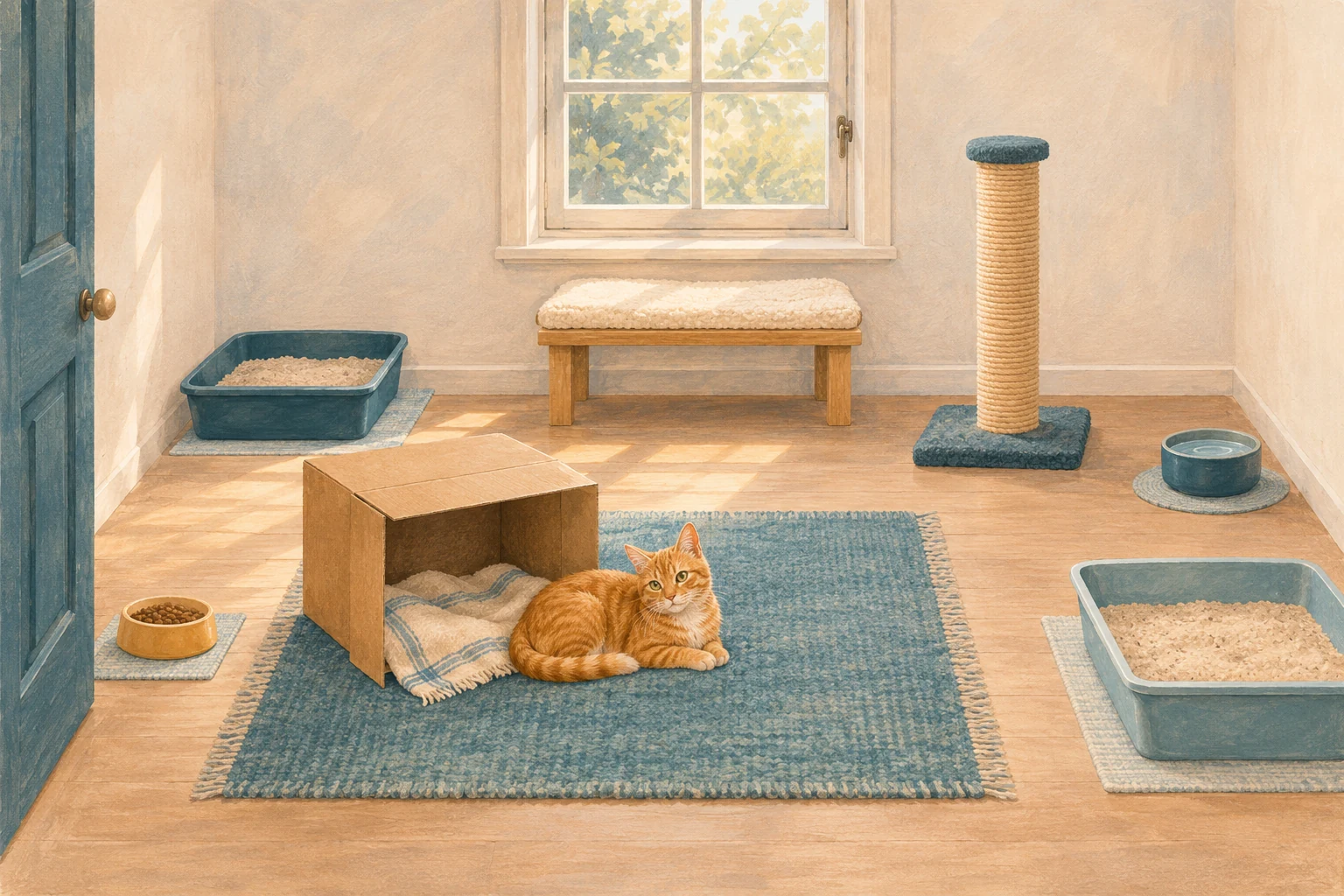
- Provide choices for hiding, resting, scratching, watching and play.
- Separate resources so access does not depend on passing another animal.
- Change one useful thing at a time and watch what the cat chooses.
A good indoor life gives a cat opportunities to explore, rest, scratch, search for food and choose when to interact. Enrichment is the everyday arrangement of those opportunities, including the quiet parts of the day. A room full of toys may still be difficult to live in if another cat blocks the doorway or there is nowhere to sleep undisturbed.
Keeping a cat contained at home can protect the cat and reduce impacts on wildlife and neighbours. The welfare question is whether that particular home meets that particular cat’s physical and behavioural needs. RSPCA Australia’s containment guidance makes both parts of that responsibility clear.
Start with the arrangement of the home
Look at the routes your cat takes between food, water, litter trays and resting places. Can they reach each resource without squeezing past a noisy appliance, a dog or another cat? Are all the useful things crowded into a single corner?
Cats benefit from separate locations for essential resources and from having choices. In a household with several cats, a collection of bowls beside one another may still leave one cat guarding the whole feeding area. Spread resources across suitable locations so access does not depend on approaching another animal.
Familiar smells also help make a home feel secure. Avoid strong fragrances around the cat’s resting places, and preserve some familiar bedding when refreshing their surroundings. This does not mean leaving trays or bedding dirty; it means considering comfort as well as cleanliness. A predictable pattern of feeding and gentle human contact can support the physical changes. See the Feline Veterinary Medical Association’s environmental guidance.
Protect somewhere to withdraw
A retreat should be somewhere the cat can choose to enter and leave, with protection from unwanted attention. A quiet room or sheltered part of the home can work if its useful resources are accessible. The important feature is what happens there: visitors, children and other animals must respect the cat’s opportunity to rest.
A retreat loses its value if someone reaches inside to bring the cat out whenever they want a cuddle. Explain the household rule before inviting people to meet the cat. Quietly using a refuge is a choice to respect, while a new pattern of hiding deserves attention to the cat’s health and circumstances.
The Ohio State University refuge guidance treats a safe resting space as part of ordinary indoor care. It is useful even for an outgoing cat.
Offer a useful view
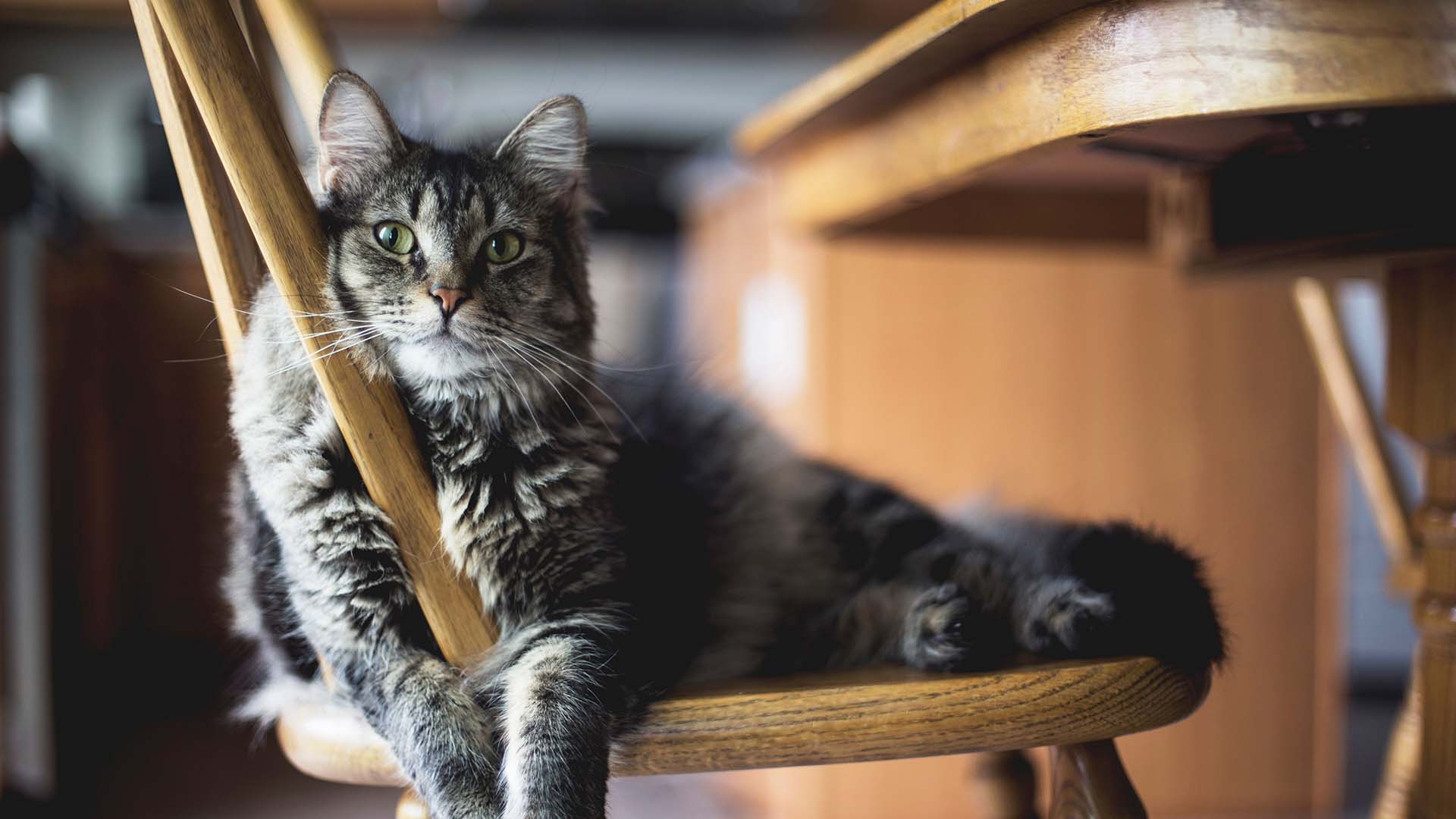
A perch lets a cat observe activity from a position they find comfortable. It need not be an elaborate climbing tower: a stable chair or suitable shelf may provide a worthwhile outlook. Start by noticing where the cat already chooses to sit and what they watch.
Check stability before use and provide an approach the cat can manage. Height is not a competition. An older cat or a cat with limited mobility may need a lower resting surface and an easier route. Keep the choice voluntary; repeatedly lifting a reluctant cat onto new equipment does not show that they enjoy it.
Different views can offer different experiences, so watch which locations the cat actually uses. The Ohio State University advice on perches emphasises suitable locations and individual preferences. A useful improvement is one the cat chooses, not necessarily the most expensive item in the room.
Make scratching easy to choose
Scratching helps cats stretch, maintain their claws and communicate through scent and visible marks. It is a normal activity to accommodate. Punishing it can create fear without providing a suitable place to scratch.
Offer a surface that stays steady under the cat’s weight and allows a comfortable stretch. Some cats choose upright posts; others prefer horizontal pads. Texture matters too, so a cat ignoring one product may still use cardboard, sisal or another appropriate surface.
Location is part of the invitation. Place a scratcher near a favoured resting or activity area, or close to a place the cat already scratches. A post hidden in an unused room may be inconvenient from the cat’s point of view. Observe whether the cat can use it fully and whether it wobbles. In homes with several cats, offer sufficient accessible options. RSPCA NSW’s scratching advice explains these practical choices.
Play as a shared activity
Interactive play can provide opportunities to stalk, chase and catch. Move a suitable toy in ways the cat can follow and intercept, and allow successful catches. Some cats enjoy movement across the floor; others respond to a toy briefly disappearing behind an object.
Let the cat’s engagement guide the session. Watching, crouching and preparing to pounce can be part of play; constant running is not the only sign of interest. If the cat walks away, give them that choice. Try different toys or another suitable opportunity instead of insisting.
Use toys rather than fingers or feet as targets. Check for loose pieces, and put string or wand toys away securely after supervised play because swallowed material can cause serious harm. With several cats, individual sessions may allow a quieter cat to participate without competition. The Feline Veterinary Medical Association’s play guidance supports adapting play to the individual.
Make food interesting without making it difficult
Food enrichment can add searching and manipulation to eating. Begin with an easy task: a small amount of the cat’s usual food in a simple, accessible puzzle is more useful than a complicated device the cat cannot solve.
Use food from the planned daily allowance, rather than continually adding treats. Show the cat where the food is and observe whether they can obtain it comfortably. Increase difficulty only when the current version is straightforward. A puzzle should provide an opportunity, not prevent the cat from eating.
Choose equipment that can be cleaned and inspected, and consider the cat’s usual food and physical abilities. Keep necessary meals accessible if the puzzle is not working for them. Cats Protection’s feeding enrichment advice offers simple starting points. Cats with a prescribed diet or feeding plan need enrichment that fits that plan; a puzzle is not a substitute for nutritional advice.
Change one useful thing at a time
Replacing the bed, moving the bowls and introducing several new toys together can make it hard to tell what the cat finds helpful. Choose one practical improvement and make it when you can observe the response.
Leave room for voluntary investigation. A cat may sniff a new object and return later, or prefer the existing option. Keep a useful familiar alternative available while you learn what works. Record simple observations: which resting place is used, whether the puzzle is manageable, and whether the route to resources remains comfortable.
This approach also prevents unnecessary spending. If a stable, well-placed scratcher solves a particular problem, another collection of toys may not address anything the cat needs. Ohio State University’s advice on making changes recommends manageable adjustments and time to assess them.
Safe access to fresh air
Where the home allows it, a secure outdoor enclosure can offer additional sights, smells and activity while maintaining containment. The design needs to prevent escapes and keep the cat safe, with access back to a comfortable indoor area.
A balcony is not automatically a secure enclosure. Barriers need to address gaps, climbing, falling and entanglement; inspect the whole arrangement rather than assuming a net makes it safe. Indoor hazards still matter too, including accessible medicines, unsuitable plants and electrical cables.
Cats who live indoors also need a preventive health plan. Discuss vaccinations and parasite protection with the veterinarian rather than assuming that staying inside removes every risk. Cats Protection’s indoor-cat guidance covers these household considerations; for the Australian containment approach, use the RSPCA guidance.
Notice the whole cat.
Notice ease and choice
Observe the resting body and whether the cat chooses to approach. Leave a clear way to move away.
Watch what changes
Notice attention, ears, eyes, movement and the surroundings together.
Respect a pause
Turning away, tension or ears angled back can signal a need for space. Stop and reassess.
Check the cat, not just the equipment
A cat who stops jumping, plays less, changes grooming habits or withdraws may be experiencing pain or illness. New equipment alone does not resolve that uncertainty. Contact the veterinarian promptly about a change in appetite, movement, toileting or behaviour.
It helps to describe what changed: “she now pauses before climbing onto the chair” is more informative than “she seems bored”. Note when it happens and whether eating, grooming or interactions have changed too. The Feline Veterinary Medical Association’s pain guidance explains why subtle observations matter.
Review enrichment as the cat’s circumstances change. The aim is a home where their needs are met and their choices are respected. For a cat newly joining the household, start with our guide to bringing a rescue cat home before expanding the environment.
Follow the evidence
Sources & further reading
Article sources checked 10 November 2026. Diagram sources checked 10 November 2026.
Follow a source for its full context, and check current government guidance for rules that may change.
- RSPCA Australia — Is it okay to keep my cat at home all of the time?kb.rspca.org.au
- Feline Veterinary Medical Association — What your cat needs to feel securecatfriendly.com
- Ohio State University — Refugeindoorpet.osu.edu
- Ohio State University — Perchesindoorpet.osu.edu
- RSPCA NSW — Cats need to scratchrspcansw.org.au
- Feline Veterinary Medical Association — Playing with your catcatfriendly.com
- Cats Protection — Feeding enrichment puzzles for your catcats.org.uk
- Ohio State University — Making changesindoorpet.osu.edu
- Cats Protection — Indoor catscats.org.uk
- Feline Veterinary Medical Association — How do I know if my cat is in pain?catfriendly.com
- RSPCA NSW — Touch and cat body languagerspcansw.org.au
- PDSA — Cat body languagepdsa.org.uk