Published .
The starting point
At a glance
- Prepare a quiet retreat with separate places to eat, drink, rest and toilet.
- Let the cat choose when to approach; introduce the rest of the home gradually.
- Check daily care and health changes with your vet and rescue team.
A new home brings unfamiliar smells, sounds and people. For an adult rescue cat, being able to retreat and decide when to approach can make that change more manageable. A quiet room is a useful starting point: somewhere to eat, sleep and use the litter tray without navigating the whole household.
This guide is for an adult cat arriving in a home, with arrangements adapted to that individual. A cat recovering from illness, living with a disability or needing medication may require a different plan. Before collection, ask the rescue team what they have observed, what remains unknown and what care the cat needs.
Prepare the room before collection
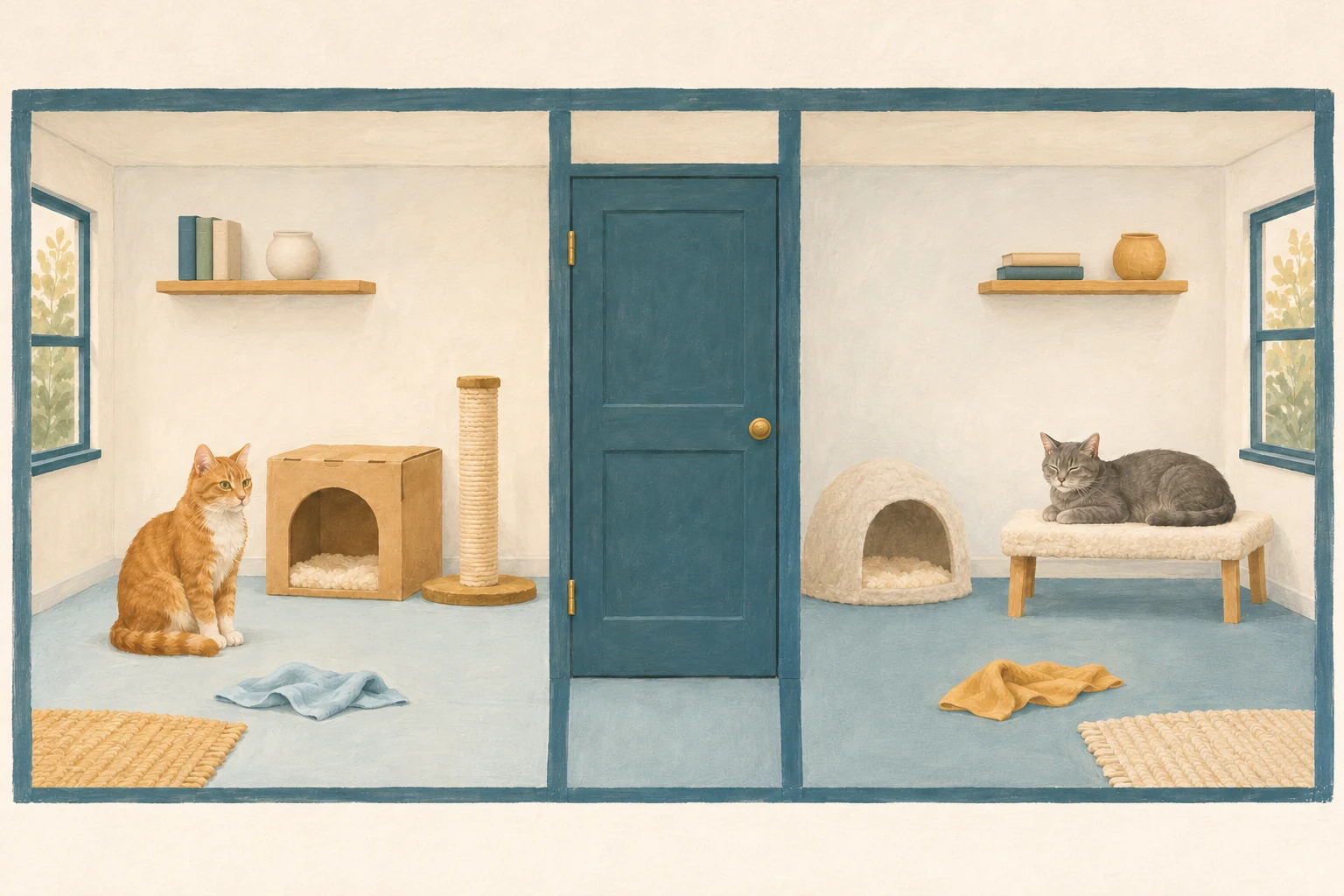
Choose a room where you can control access and keep noise low. Provide a comfortable bed, a hiding box or open carrier, a secure perch and scratching surfaces. Arrange food, water and toileting areas separately. The point is to offer choices: somewhere out of sight, somewhere to watch safely and routes between essential resources.
Think about accessibility as well as height. A perch is only useful if this cat can reach and leave it comfortably. Ask about mobility needs before choosing furniture. Keep the hiding place accessible for an emergency without making ordinary care an intrusion into it. RSPCA NSW’s guide to meeting cats’ needs explains the importance of safety, choice, rest and contact on the cat’s terms.
Check windows, screens and doors before arrival, and agree who will enter the room. Put a simple reminder on the door if visitors or children might open it accidentally.
Make toileting easy to understand
Ask which litter and tray the cat has been using. Start with that information, then adjust for the individual’s comfort. A large tray in a quiet, accessible place is preferable to one squeezed beside food or behind an obstacle.
RSPCA Australia recommends two trays in separate places for one cat; in a household with several cats, the usual starting point is one tray per cat plus an extra. Layout matters as much as the count. Remove waste daily, clean trays regularly and avoid moving them repeatedly. Older or unwell cats may need an easier entrance. These recommendations are set out in the RSPCA’s litter-tray guidance.
An accident is information, not disobedience. Check access and cleanliness, and seek veterinary advice about a new or concerning change. Punishing the cat can add fear to an already difficult situation.
A quiet room. Room to choose.

A retreat
Let the cat choose when to leave the hide.
A reachable lookout
Keep resting places stable and easy to access.
Food and water
Give each its own calm, accessible place.
Scratching
Offer a steady surface in a useful location.
Separate trays
For one cat, start with two trays in different places, away from food and water.
Safe access
Check windows, doors and clear routes between resources.
Basis: AAFP / ISFM · RSPCA Australia
Keep the first arrival quiet
Travel with the cat in a suitable, securely closed carrier. Ask whether familiar bedding can accompany them. Bring the carrier directly into the prepared room, secure the room’s door and place it on the floor before opening it. Let the cat choose when to leave.
Avoid surrounding the carrier, tipping the cat out or reaching in to pull them onto your lap. Sit quietly at a distance and keep early visits calm. If your presence prevents the cat from eating or exploring, give them privacy and return later. Cats Protection’s arrival advice emphasises allowing the cat to emerge voluntarily.
The same principle applies when you begin opening other rooms: offer access gradually once the cat is comfortable, and retain an unobstructed route back to their retreat. Where other pets live, exploring the house and meeting those pets are separate steps.
Notice what the cat is communicating
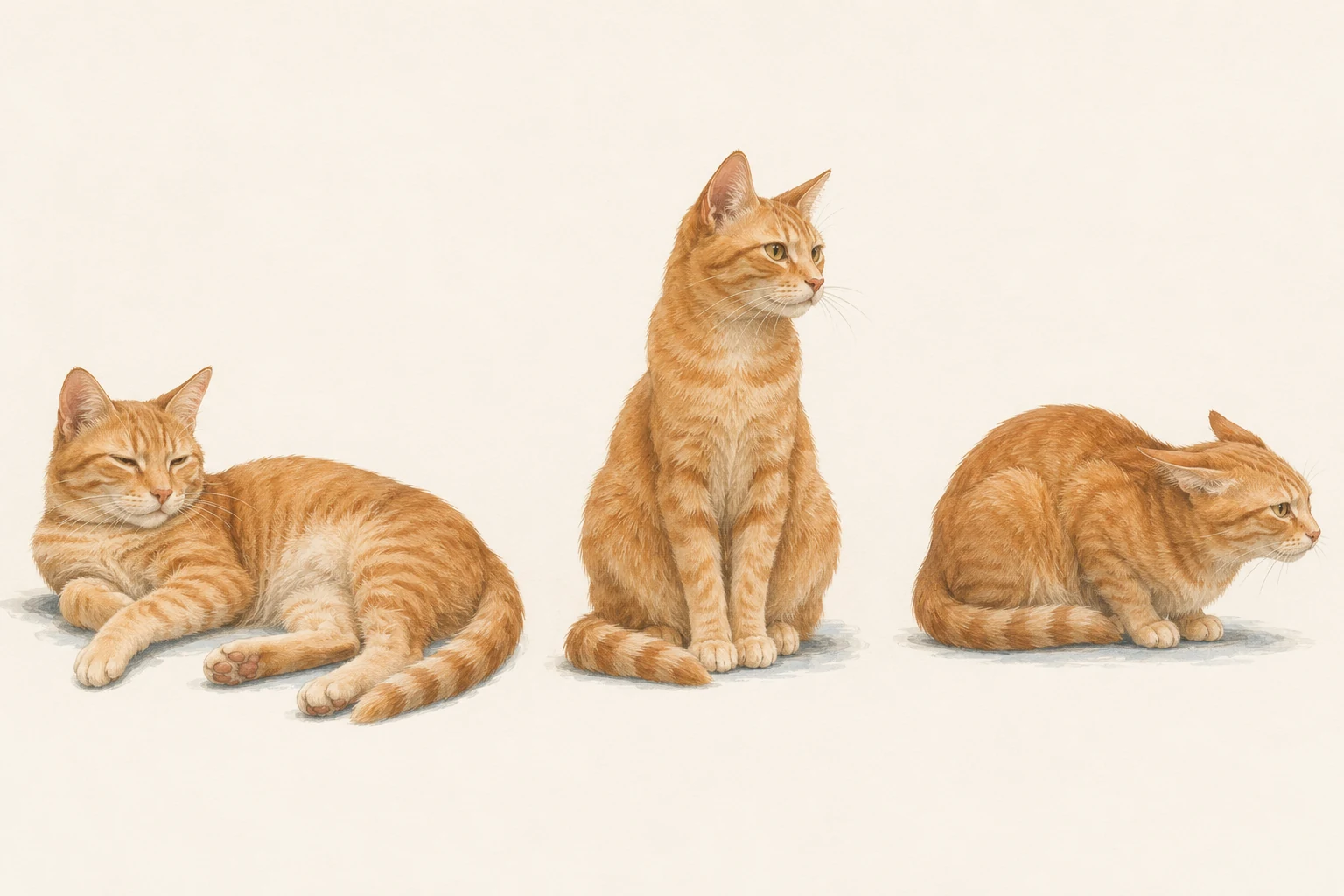
Look at the whole animal and the situation. Relaxed posture, easy movement and approaching voluntarily are more encouraging than simply being still. Ears drawn back, tense movement, fleeing, hissing or swiping indicate that the interaction needs more space. Stop reaching towards a cat who is trying to withdraw.
Purring alone does not establish that a cat is comfortable: cats may also purr when distressed or in pain. Cats Protection’s body-language guide describes this distinction. Avoid treating one gesture as a complete assessment of health or mood.
You do not need to win affection on the first day. A useful observation might be that the cat remained relaxed while you replaced water, or chose to stay nearby after you sat down. Record what happened and what changed, rather than labelling the cat “unfriendly”. Those details help the rescue team understand whether the current arrangement is working.
Keep ordinary care predictable
Before leaving the rescue, collect the veterinary records and written instructions for any ongoing treatment. Ask about the usual food, appetite, litter habits and preferred interactions. Confirm who to contact if a concern appears and which veterinary appointments remain due. Do not assume that every rescue follows the same health-care schedule.
Keep a brief daily note of food eaten, urine and stools, activity and any change that worries you. In a busy household, nominate who checks each item so that “someone probably fed the cat” does not become the record.
Offer familiar routines without expecting the cat to perform. Quiet company, opportunities to rest and gentle play can become part of daily life as the cat engages. Use toys rather than hands for play, and let the cat leave. The practical aim is a household that is understandable and responsive, not a timetable for becoming a lap cat.
Introduce resident cats in stages
A friendly approach to you does not mean the newcomer is ready to share space with another cat. Start with separate areas and complete resources for each. Discuss health precautions with the rescue and vet before animals meet or exchange belongings.
The RSPCA’s cat-introduction guide moves from scent familiarity to controlled opportunities to see one another, then carefully supervised proximity. Progress depends on all cats being comfortable with the previous stage. A secure barrier must actually prevent unwanted contact; an open doorway is not a controlled introduction.
If either cat becomes distressed, end the encounter and return to an easier stage. Keep food, water, toilets and resting places available without requiring one cat to pass the other. Introductions may take weeks or months, and compatibility is never guaranteed. Seek help when tension persists, rather than repeatedly arranging confrontations in the hope that the cats will settle it themselves.
Manage dogs and children thoughtfully
A dog must be prevented from chasing the cat. Begin with separation and scent familiarity, then use controlled meetings in which the dog can remain calm and the cat has space to withdraw. RSPCA Victoria’s new-cat guidance stresses short, managed encounters and warns against allowing chasing.
If a dog cannot disengage or remain controlled, stop and ask the rescue or a qualified behaviour professional to help assess the situation. A lead does not, by itself, make an interaction comfortable for the cat. Keep the animals separated whenever you cannot manage their contact safely.
Explain to children that the retreat is a place to leave the cat alone. Adults should supervise interactions, keep play gentle and use suitable toys. Do not ask a child to hold a frightened cat in place. An adult cat’s willingness to approach is a better starting point than passing them around for introductions.
Plan for a safe, interesting life at home
Settling in is the beginning of a longer care arrangement. RSPCA Australia recommends keeping cats contained on their property, with safe enclosed outdoor access where suitable. Containment must include ways to scratch, climb, play, hide and rest; simply shutting doors does not meet every need.
Walk through the home again as the cat gains access to more rooms. Check potential escape routes and ask household members to keep entry doors controlled. Review whether quiet resting places remain available when ordinary family activity resumes.
Check flowers as well. True lilies and daylilies can cause severe kidney injury in cats, including after ingestion of pollen or vase water. Keep these plants out of the home. If exposure is suspected, contact a vet immediately, even if the cat seems well. The FDA’s lily-safety advice explains why waiting for symptoms is unsafe.
Know when settling-in advice is not enough
A cat who stops eating needs prompt veterinary advice. Stress can affect appetite, but so can dental pain and other illness; the cause cannot be established from hiding behaviour alone. Tell the vet when the cat last ate and what you have observed. Cornell’s guidance on appetite loss explains why food refusal merits assessment. Do not delay that call while trying a succession of tempting foods.
Repeated straining with little or no urine is an emergency. Contact an emergency vet immediately rather than assuming constipation or stress. Blood in urine, crying during toileting and new toileting changes also need veterinary attention. Cornell’s urinary-tract guidance identifies urinary obstruction as potentially life-threatening.
Keep the rescue team informed about adjustment difficulties, but use veterinary care for health concerns. You can revise the room, slow introductions and change daily arrangements without treating the adoption as a test the cat must pass.
Considering adoption? Talk with GAW about cats and the adoption process.
Follow the evidence
Sources & further reading
Article sources checked 10 November 2026. Diagram sources checked 10 November 2026.
Follow a source for its full context, and check current government guidance for rules that may change.
- RSPCA NSW — Meeting the needs of catsrspcansw.org.au
- RSPCA Australia — How do I encourage my cat to use a litter tray?kb.rspca.org.au
- Cats Protection — Bringing a cat homecats.org.uk
- Cats Protection — Cat body languagecats.org.uk
- RSPCA Australia — Introducing a new cat to an existing catkb.rspca.org.au
- RSPCA Victoria — Bringing home your new catrspcavic.org
- RSPCA Australia — Tips for new cat ownersrspca.org.au
- FDA — Lovely lilies and curious cats: a dangerous combinationfda.gov
- Cornell Feline Health Center — Anorexiavet.cornell.edu
- Cornell Feline Health Center — Feline lower urinary tract diseasevet.cornell.edu
- AAFP / ISFM — Feline environmental needs guidelinesjournals.sagepub.com