Published .
When a cat urinates or passes stool outside the tray, begin by asking what has changed for the cat. Pain, illness, access difficulties and stress can all contribute. Calling it bad behaviour does not explain the cause.
A useful plan combines veterinary assessment with a careful look at the home. The Feline Veterinary Medical Association’s house-soiling guidance explains why medical, environmental and social needs must be considered together.
The starting point
At a glance
- A toileting change can be a health concern; do not assume misbehaviour.
- Look at tray access, cleanliness, location and the cat’s preferences.
- Repeated straining with little or no urine needs emergency veterinary care.
Recognise a possible urinary emergency
Repeated straining, frequent unsuccessful trips to the tray, crying while trying to urinate, or passing little or no urine require immediate veterinary attention. A blockage can be life-threatening. Male cats are particularly at risk, but concerning signs in any cat need assessment.
A cat may also pass small amounts of bloody urine, vomit, become weak or stop eating. Do not wait for all these signs to appear, and do not assume that a cat producing a few drops is emptying their bladder normally.
Contact a veterinary clinic or emergency service immediately and describe exactly what you have seen. Changing the litter or offering more water cannot resolve an obstruction. Do not try to press or empty the bladder yourself. University of Illinois veterinary guidance explains the urgency and why treatment belongs in a veterinary setting.
Arrange veterinary assessment
Even when there is no obvious emergency, a new toileting change warrants a veterinary appointment. Urinary inflammation, kidney disease, diabetes and conditions that affect movement can alter how a cat uses the tray. An apparently familiar habit does not exclude a medical problem.
Tell the veterinarian whether the change involves urine, stool or both. They will decide which examinations and tests are appropriate; depending on the signs, these may include urine testing, blood tests or assessment of the digestive system.
Changing the environment can help, but it should not become a series of experiments that delays care. The Feline Veterinary Medical Association recommends investigating medical causes as part of managing house-soiling.
Changes in stool matter too
Hard, dry stools, difficulty passing them or a reduction in the cat’s usual bowel movements need attention. Constipation has several possible causes, and a cat may need more than a different litter tray or extra fibre. Contact the veterinarian, especially if the cat appears uncomfortable. If you are uncertain whether repeated straining involves urine or stool, seek urgent advice rather than deciding it is constipation. Cornell’s constipation guidance describes why assessment and treatment need to address the underlying problem.
Loose stools can also make reaching the tray difficult. Tell the veterinarian about blood or mucus, changes in frequency and any recent diet change. Diarrhoea accompanied by poor appetite, vomiting or lethargy needs prompt veterinary advice, as do repeated or worsening episodes. Young or already unwell cats need particular care. Avoid human medicines or home treatments unless the veterinarian specifically directs them; some products can harm cats. See Cornell’s guidance on diarrhoea.
Make a useful record
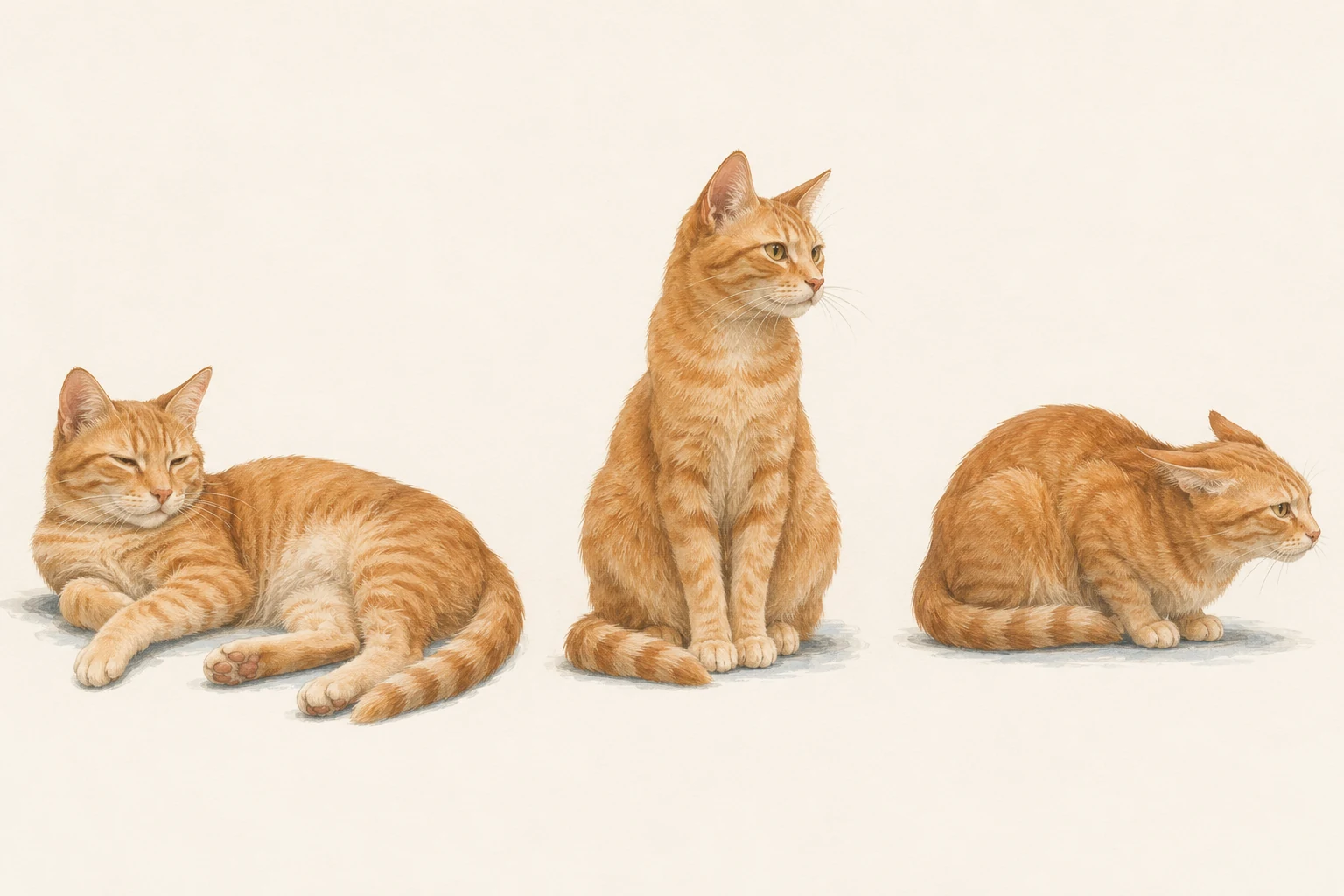
A simple record helps the veterinarian distinguish patterns. Note when the problem began, what is being passed, the locations involved and whether the frequency is changing. Describe the cat’s posture if you have actually observed it, rather than guessing from the puddle.
Include changes in food, litter, household routine and other animals. Record the number and style of trays, the litter used and the cleaning routine. A rough floor plan showing trays, affected places, doors, windows, food and water can reveal an access problem that is difficult to explain verbally.
If several cats live together, say whether you know which cat is affected. Do not assume that the most nervous cat is responsible. Bring the information you have, including uncertainty; collecting a perfect record must never delay urgent care.
These are the kinds of observations requested in the AAFP/ISFM house-soiling questionnaire, which is designed to support a veterinary consultation.
Check the route and the location
Imagine travelling to the tray from the cat’s usual resting place. Is a closed door, steep staircase, dog or another cat in the way? Can the cat leave comfortably, or might another animal block the only exit?
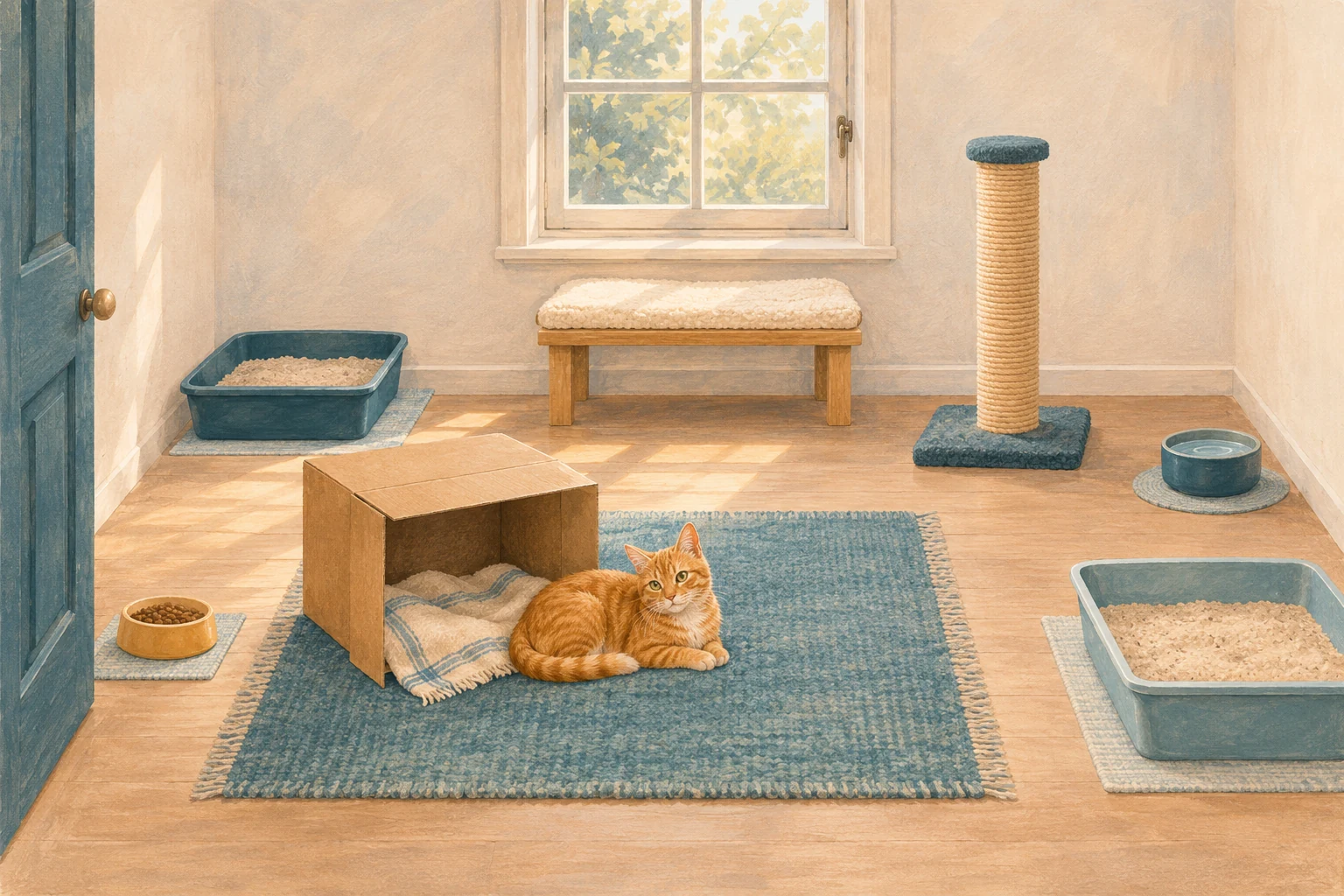
Provide trays in separate, quiet and accessible locations, away from food and water. The usual starting point is one tray per cat plus an extra. Three trays lined up together do not provide the same choice as three useful locations.
In a home with several levels, provide access on each level the cat uses. An older cat may need a nearby tray without stairs. A secluded cupboard can look tidy to a person while leaving the cat trapped or unable to move comfortably.
The Feline Veterinary Medical Association’s litter-box guidance recommends assessing the whole layout. Accessibility is about the route and the opportunity to retreat, as well as the distance.
Offer a tray and litter the cat can use
The tray needs enough room for the cat to enter, turn and adopt a comfortable position. A low entrance may help a cat with limited mobility. Check the fit of the current tray instead of assuming that one bought when the cat was small remains suitable.
Many cats prefer an open tray and a fine, unscented litter, but individuals differ. Covered trays can retain odours, and an apparently private design may be less appealing to the cat using it. Strong fragrances and deodorisers can also be unwelcome.
If testing a new litter, offer it as an additional choice while retaining a familiar option. Watch actual use, and avoid repeatedly replacing every tray and litter at once. Ohio State University’s guidance explains how tray shape, litter texture and previous experiences can affect acceptance.
Clean the tray and the affected area
Check trays frequently and remove urine and faeces promptly. Some cats are reluctant to use a tray after it has been soiled. Regularly empty and wash the tray with an appropriate mild cleaning method, rinse it and allow it to dry before refilling.
For accidents, remove solid waste or absorb urine, then clean the affected surface thoroughly. Use a cat-safe product suitable for that surface and follow its instructions. An appropriate urine cleaner helps address the residue; covering the smell with perfume does not remove the problem.
Check whether the surface needs a patch test, and keep the cat away while cleaning and drying as directed. Cats Protection’s toileting advice covers both tray hygiene and cleaning soiled areas. Cleaning supports the wider plan; it does not identify or treat the original cause.
Reduce pressure around toileting
A cat should be able to use the tray without interruption from children, dogs or people. Avoid noisy locations where an appliance may start unexpectedly. Protect access to comfortable hiding and resting places throughout the home too.
Consider recent changes: visitors, building activity, a new pet or a changed routine may be relevant. In a household with several cats, distribute food, water and resting opportunities as well as trays, so one animal cannot control access to everything.
Remain calm after an accident. Punishment, shouting or spraying water can increase anxiety and make it harder for the cat to feel safe. RSPCA Australia’s litter-tray advice recommends addressing the environment and avoiding punishment. If another cat is involved, our guide to careful introductions explains how to recognise and reduce tension.
Consider whether the cat is marking
Urine spraying is scent communication and differs from ordinary bladder emptying. A cat may stand with the tail raised, back towards a vertical surface and release a small amount of urine. Tell the veterinarian if you have seen this pattern.
Spraying can occur in male or female cats, including desexed cats. Changes inside the home or the presence of unfamiliar cats outside may contribute to a sense of insecurity. Marking near doors and windows can be a clue, but location alone does not establish the cause.
A health check still comes first. Then the plan can address relevant triggers, such as conflict over resources or a distressing view of neighbouring cats. Cats Protection’s spraying guidance recommends veterinary assessment and, where needed, qualified behaviour support.
Review the plan with support
Tell the veterinarian what improves and what persists. Agree on follow-up and report new signs promptly. If medical assessment does not explain the problem, ask about qualified behaviour help, as recommended by Cats Protection. The cat’s comfort and ordinary daily activities are useful measures of progress alongside a cleaner floor.
Follow the evidence
Sources & further reading
Article sources checked 10 November 2026.
Follow a source for its full context, and check current government guidance for rules that may change.
- Feline Veterinary Medical Association — Not using the litter boxcatfriendly.com
- University of Illinois College of Veterinary Medicine — Blocked cats: an emergency for male catsvetmed.illinois.edu
- Cornell Feline Health Center — Constipationvet.cornell.edu
- Cornell Feline Health Center — Diarrheavet.cornell.edu
- AAFP/ISFM — House-soiling: Cat owner questionnairejournals.sagepub.com
- Feline Veterinary Medical Association — Everything you should know about litter boxescatfriendly.com
- Ohio State University — Litter boxesindoorpet.osu.edu
- Cats Protection — Cats and toiletingcats.org.uk
- RSPCA Australia — How do I encourage my cat to use a litter tray?kb.rspca.org.au
- Cats Protection — Cats and sprayingcats.org.uk