Published .
The starting point
At a glance
- Observe what happens during absences and discuss concerns with your vet.
- Make a plan that avoids repeatedly overwhelming the dog.
- Build comfortable separations gradually; punishment does not address distress.

When a dog panics during an absence, daily life can become difficult for everyone. Work, appointments and shopping still need to happen, while the dog may be barking, pacing or trying to escape. The useful starting point is a plan that protects the dog now and makes future absences easier.
“Separation distress” describes a problem to investigate, rather than a diagnosis you can confirm from a damaged door. An individual assessment matters. Different dogs need different arrangements, and progress does not follow a guaranteed timetable.
Describe what happens before naming it
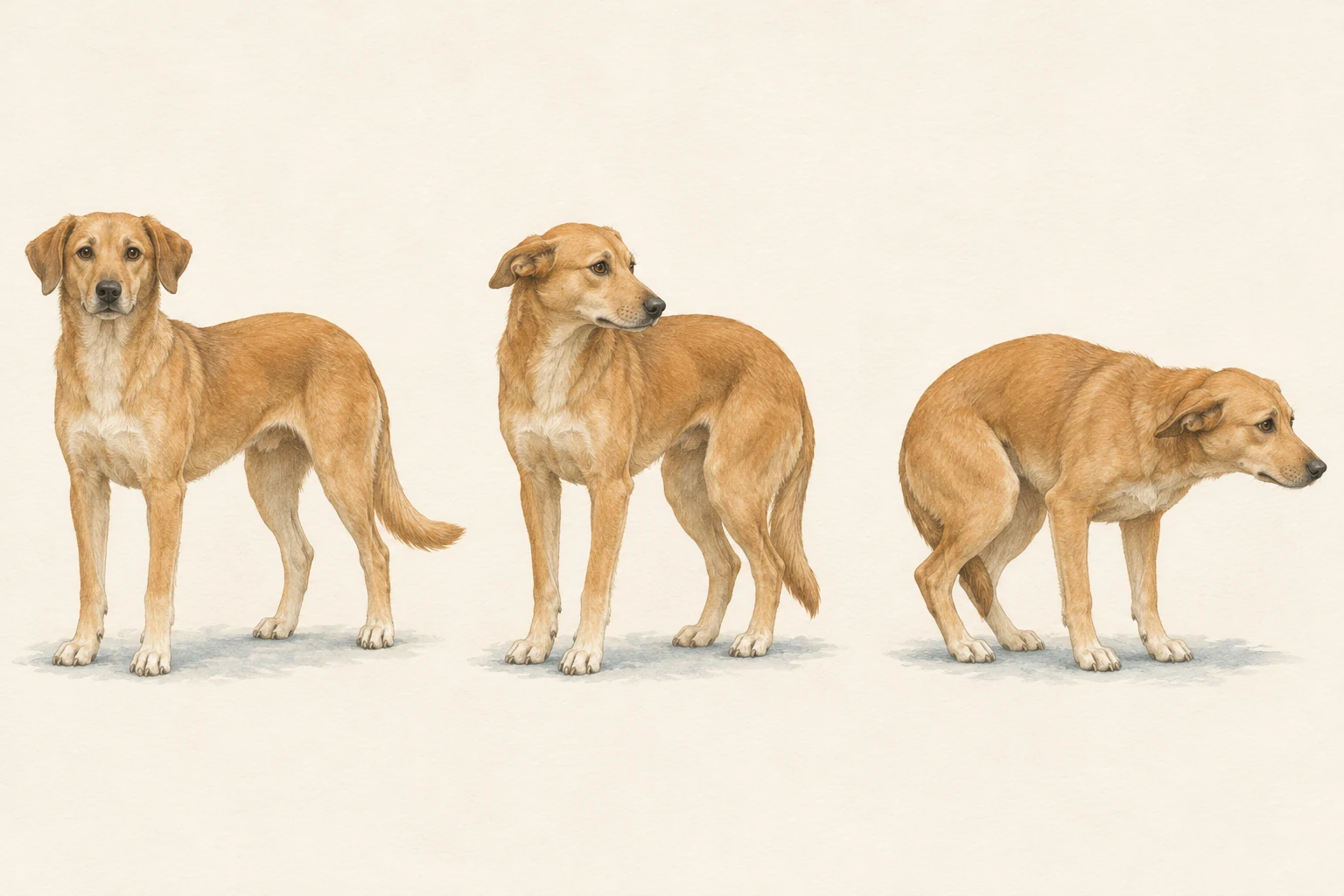
Signs can include repeated vocalising, restless movement, panting, drooling, indoor toileting or damage around exits. Some dogs injure themselves trying to get out. Others are quieter: they may remain watchful, fail to settle or leave food untouched until somebody returns.
These observations do not establish the cause on their own. Chewing can be ordinary exploratory behaviour, and barking may follow passing traffic rather than a departure. Look for the relationship between an absence and the whole pattern of behaviour. PDSA’s veterinary overview describes separation-related problems as a group of difficulties with potentially different emotional causes.
If there is immediate danger, such as an injury or a frantic attempt to break through a barrier, return to safety and seek veterinary help. Do not extend a distressing absence to collect a more dramatic example.
Use a recording to answer useful questions
A camera can reveal what happens after the door closes, including quieter signs that neighbours cannot report. Position it safely, with cables inaccessible, and check that it captures the dog's usual resting area and exit. Sound can help you identify an external trigger. Use the shortest observation needed; a recording is information for care, not an endurance test.
Note the departure time, first noticeable change, what the dog does next and whether they settle. Record who left and who remained. Include anything unusual that day, such as building noise or a change in routine.
The RSPCA’s separation guidance recommends checking for less obvious distress and avoiding punishment. On returning to a mess, give the dog a safe toilet opportunity and clean up calmly. A lowered head or tucked tail in response to an angry person does not prove that the dog understands a past act as wrongdoing.
Arrange a veterinary assessment
Tell your vet about sudden changes, house-soiling, disrupted sleep, altered appetite or difficulty moving, as well as the behaviour during departures. Take relevant recordings and the current medication list. A dog needing to urinate urgently, experiencing pain or reacting to a frightening noise may need a different plan from one distressed by separation itself.
The University of Illinois veterinary FAQ explains why medical issues, noise fears, frustration at barriers and ordinary puppy behaviour need consideration. Several problems can occur together.
A newly adopted dog's history may be incomplete. Describe what you have seen rather than assigning abandonment, abuse or an attachment problem without evidence. The assessment should work from this dog's current needs. Ask the vet who can provide suitably qualified, reward-based behaviour support and how the professionals will share information.
Make unavoidable absences part of the plan
Training is difficult to arrange if the dog repeatedly experiences absences they cannot cope with. Discuss temporary cover: a familiar person staying at home, a suitable sitter, adjustments to household schedules or another arrangement the dog already finds comfortable.
Check the arrangement from the dog's perspective. A busy day-care setting is not automatically suitable for a fearful dog. Someone visiting halfway through a long absence may not help a dog who becomes distressed immediately. Trial any new care arrangement while you can respond.
The ASPCA’s treatment guidance explains the importance of avoiding overwhelming separations during a gradual treatment programme. If that is financially or practically difficult, tell the treatment team early. Give them your actual working hours and available support, rather than agreeing to a plan you cannot carry out. They can help prioritise welfare and feasible next steps.
Find a genuinely comfortable place
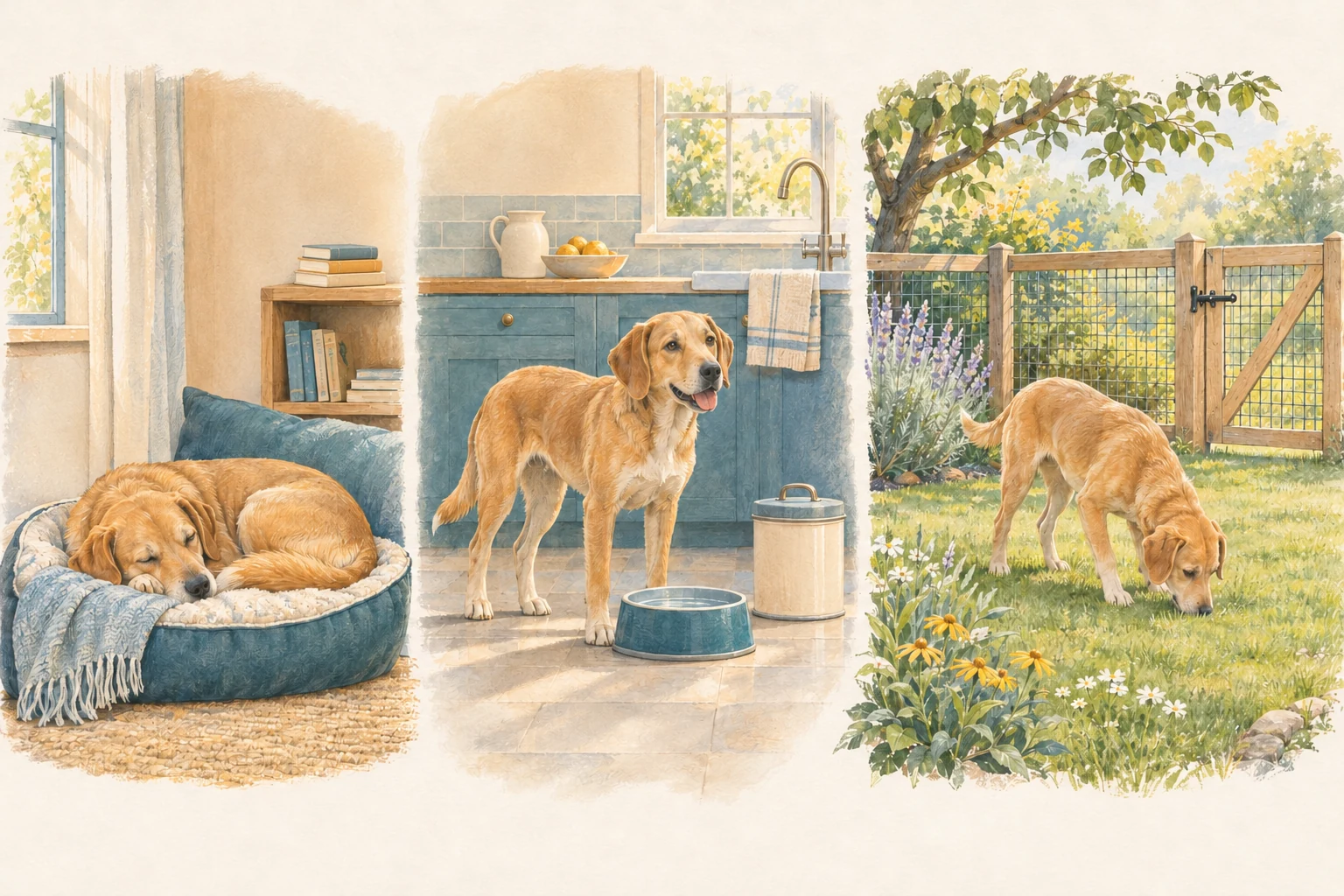
A secure room, a gated area and a crate are different environments. None becomes comforting simply because a person calls it a safe space. Some dogs relax in a familiar open crate but panic when its door closes. Others cope with a person leaving the house but become frustrated behind a gate.
Start by observing comfort while somebody is home. Provide water, suitable bedding and protection from household hazards. Do not suddenly restrict a dog to a small unfamiliar space to prevent damage.
VCA’s veterinary behaviour guidance distinguishes distress about separation from difficulties with confinement. It also notes that some dogs are comfortable with another person, while others struggle when a particular person leaves. This difference affects whether a sitter solves the immediate problem. Share it with your vet rather than repeatedly testing arrangements that provoke panic.
Practise below the point of distress
Gradual practice means starting with a version of separation the dog can manage comfortably. Depending on the dog, that may be a person taking one step away, briefly moving out of view or going through an exit. Start from observed ability, not from a standard number of minutes.
Return before distress develops. Use observation to decide whether to repeat an easy step, make it slightly harder or make it easier. Change one part at a time: a longer duration and a different door together make it harder to understand what affected the dog.
The Merck Veterinary Manual’s separation section describes individually paced departures and video monitoring. Sustained distress is not a useful lesson in independence. Quietness alone also needs interpretation: look for comfortable resting and normal behaviour, rather than assuming that silence means recovery. A qualified professional can help interpret ambiguous recordings and design the next step.
Support the day around the practice
Keep meals, toilet opportunities, appropriate exercise and rest reasonably predictable. Choose activities the dog enjoys without trying to exhaust them. A familiar food toy may help a comfortable dog occupy themselves, but it cannot make a panicking dog feel safe by itself.
Introduce any toy while supervising and check that it is suitable for the individual dog. If the dog normally enjoys it but stops eating during an absence, record that change. Do not keep increasing the value or quantity of food while leaving the underlying distress unaddressed.
RSPCA Australia’s advice for dogs anxious at home supports veterinary assessment, appropriate daily activity and behaviour support. These everyday arrangements provide a foundation; they do not replace individual treatment.
Discuss treatment without blaming the dog or yourself
For some dogs, a veterinarian may recommend medication alongside environmental changes and a behaviour plan. Its purpose is to reduce suffering and support treatment. Medication choice, monitoring and any change or withdrawal belong with the prescribing vet. Do not substitute a human medicine or an online supplement recommendation.
Cornell’s veterinary guidance on anxious behaviour explains that treatment depends on the individual and may require sustained support. Ask what improvement should look like, what adverse changes to report and when to review the plan.
Affection is not evidence that you caused the problem. Following a person around the house does not, by itself, establish an increased risk of separation distress, as the Merck Veterinary Manual explains. Focus on observable comfort and practical support.
Measure welfare as well as minutes
Keep a simple record of successful practice, early signs of worry, care arrangements and changes made. Share short representative recordings, including comfortable sessions, so the professional can see progress as well as problems.
A useful review asks whether the dog settles more readily, shows fewer or less intense signs of distress and recovers more easily. Minutes alone can hide an uncomfortable session. If progress stalls, review health, environment and the size of training steps instead of automatically extending the absence.
AAHA’s clinical example uses behaviour logs, recordings and follow-up assessments to guide treatment. Ask your own team to agree a review schedule and a contact for difficulties. The next manageable step may be very small; it is still worthwhile when the dog is comfortable.
For the wider arrival routine, see your rescue dog’s first week.
Follow the evidence
Sources & further reading
Article sources checked 10 November 2026.
Follow a source for its full context, and check current government guidance for rules that may change.
- PDSA: Separation anxiety in dogspdsa.org.uk
- RSPCA: Recognising separation-related behaviourrspca.org.uk
- University of Illinois: Separation anxiety FAQvetmed.illinois.edu
- ASPCA: Separation anxietyaspca.org
- VCA: Separation anxiety synopsisvcahospitals.com
- Merck Veterinary Manual: Behaviour problems of dogsmerckvetmanual.com
- RSPCA Australia: Anxiety when home alonekb.rspca.org.au
- Cornell: Helping dogs cope with anxious behaviourvet.cornell.edu
- AAHA: Sample case of canine separation anxietyaaha.org