Published .
The starting point
At a glance
- Start with secure surroundings, a quiet resting place and a manageable routine.
- Give the dog choices and space; confidence does not follow a seven-day deadline.
- Agree on care responsibilities and who to contact when something changes.
The first week with an adopted dog is a time to make everyday life understandable. Your dog is finding out where to sleep, how to ask to go outside and whether people will respect their space. You are learning what helps this particular dog feel comfortable.
There is no deadline by which a dog must become confident, affectionate or comfortable alone. Use this guide as a set of decisions, rather than a seven-day test. Ask the rescue team what they have observed, including what remains unknown, and adjust the plan with them and your vet.
Prepare the home before collection
Walk through the house and garden at dog height. Secure chemicals, medicines, batteries, electrical leads and accessible food. Check the bottom of fences, gate latches and spaces behind sheds. Decide how you will keep the dog away from an opening front door while someone receives a delivery. A garden that contained a previous dog may not contain this one.
Prepare a quiet resting place with bedding and water, away from busy doorways. Everyone should know that this is somewhere the dog can retreat without being followed. Make a separate space for resident animals before the arrival, rather than trying to improvise after an uncomfortable meeting. RSPCA WA’s settling-in guidance supports secure surroundings, a retreat and manageable early experiences.
Make the journey and arrival straightforward
Arrange suitable transport before collection. A walking harness is not automatically a car restraint: use a correctly fitted vehicle harness or secured carrier with appropriate crash-testing evidence, following its instructions. Keep the car comfortable and ventilated, and never leave the dog unattended inside. RSPCA Australia explains the important differences between restraint products.
Have a lead securely attached before opening the vehicle in an unenclosed place. Ask the rescue team to help plan loading and unloading if the dog is frightened of handling or travel. Head home without a welcome tour of shops and friends. Let the dog explore a manageable part of the house at their own pace; meeting everybody and inspecting every room can wait. RSPCA Victoria recommends a quiet arrival and avoiding forced interaction.
A routine that responds to the dog.
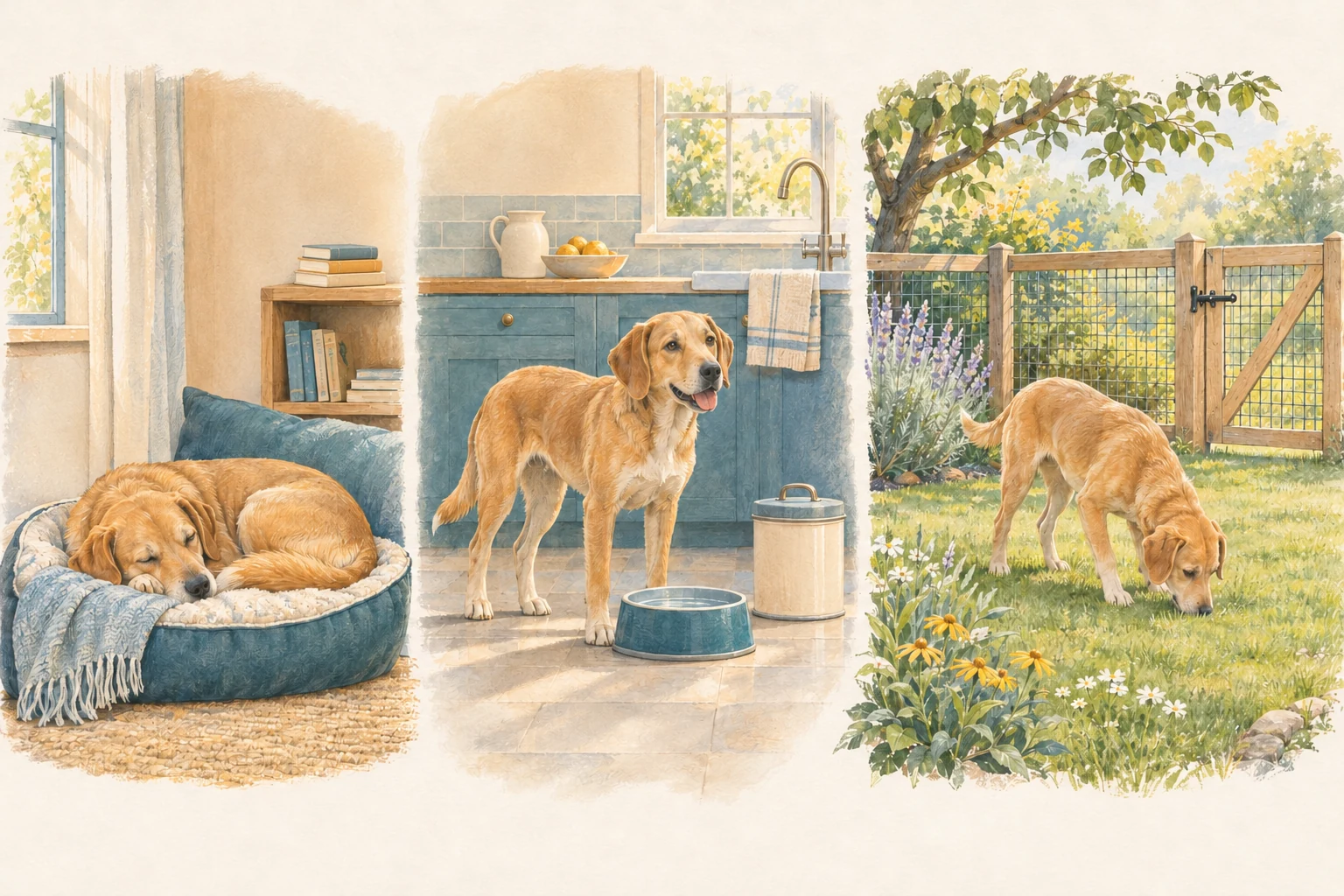
Protect rest
Keep a quiet retreat where the dog can sleep undisturbed.
Make care predictable
Agree who handles meals, water and toilet opportunities.
Explore at their pace
Offer manageable sniffing and activity without crowding.
Observe and adjust
Notice eating, drinking, toileting and changes in behaviour.
Basis: RSPCA WA
Give meals, sleep and activity a familiar pattern
Ask about the food, meal pattern and sleeping arrangements the dog already knows. Obtain some familiar food and, if available, familiar bedding. Discuss any diet change rather than replacing everything on arrival. Keep fresh water accessible.
Agree who will handle morning toileting, meals, walks and bedtime. Aim for a recognisable order that your household can maintain: outside, breakfast, a quiet activity, then rest, for example. Write down responsibilities so a busy evening does not mean a missed toilet trip or two dinners. BC SPCA’s arrival checklist covers familiar supplies, care arrangements and predictable routines.
Allow uninterrupted sleep. A crate is an option only when introduced comfortably; closing an unfamiliar dog inside does not automatically create a safe retreat. If confinement causes distress, discuss a different arrangement. Match early outings to the dog’s confidence and health, rather than using a demanding walk to exhaust them. RSPCA Victoria’s advice distinguishes a chosen resting place from distressing confinement.
Observe what happens, without inventing a history
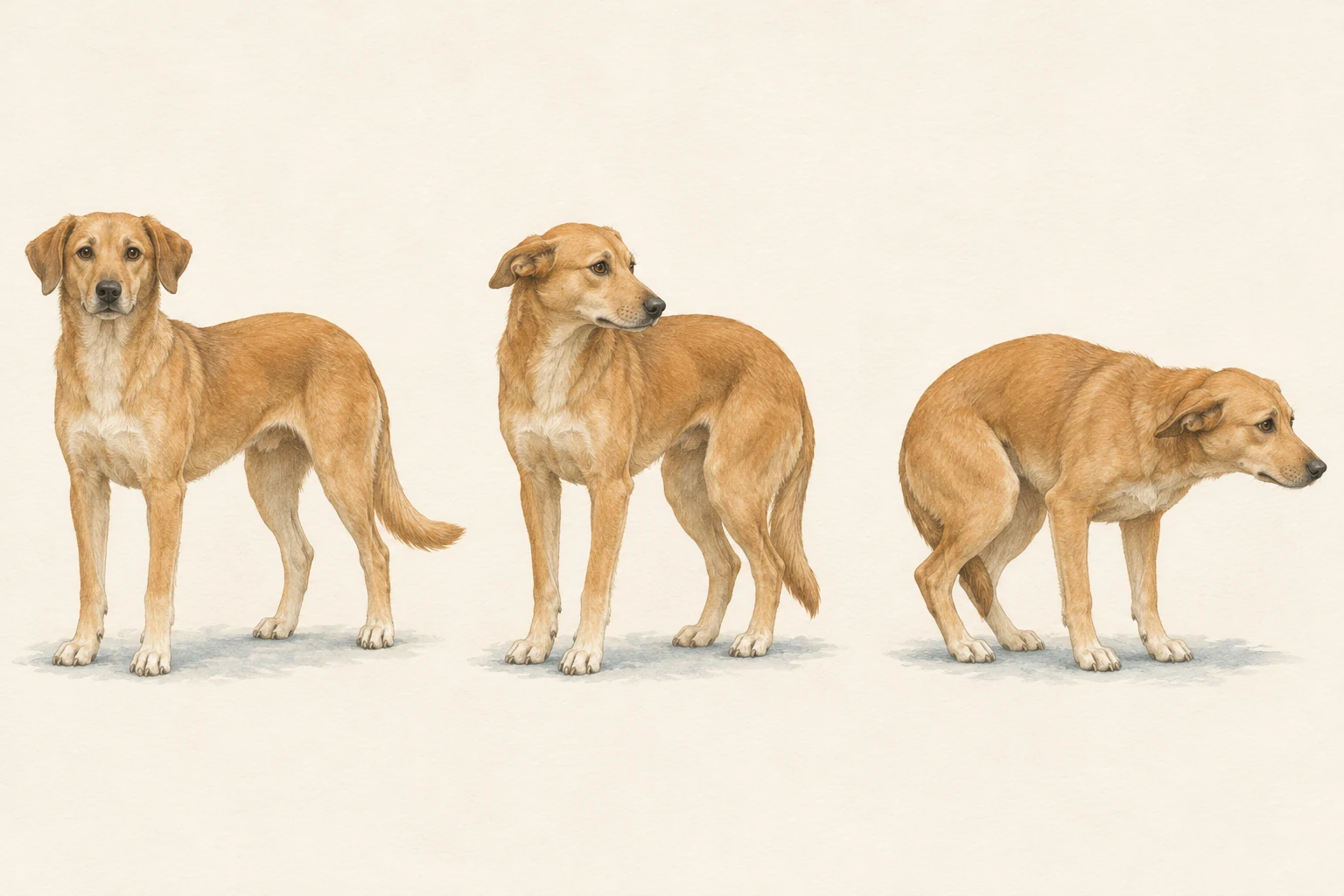
Watch the whole dog and the situation around them. Lip licking, turning the head away, repeated yawning or a tense posture can mean that an interaction needs a break. A single signal is not a complete explanation: consider what happened just before it and whether the dog can move away.
Pause an approach if the dog withdraws. Give them space rather than reaching further or encouraging several people to reassure them at once. Do not punish a growl; it is valuable information that the situation needs to change. RSPCA Australia’s communication guide explains these warning signals.
A useful note says “moved behind the chair when the visitor reached towards the collar”. It does not say “was abused by somebody wearing a hat”. Describe the event, distance, body movements and recovery. These observations can help a professional without assigning an unverified past to the dog.
Make toileting easy to get right
Show the dog the intended toilet area and return frequently, including after waking and meals. Watch for sniffing or circling. Go with them so you can reward toileting promptly, while you are still outside, rather than after the dog has returned indoors.
An adult dog may need help learning a new household’s access and routine. If you find an accident, clean it thoroughly with a suitable non-ammonia product. Punishment after the event cannot show the dog where you wanted them to go; it can make them reluctant to toilet near you. Keep track of opportunities offered and successful trips, and adjust supervision accordingly. RSPCA Australia’s toilet-training guide explains the timing of rewards and why punishment is counterproductive.
Start teaching through small successes
Notice behaviour you would like repeated: standing with paws on the floor during a greeting, looking towards you or settling near their bed. Reward promptly with something the dog enjoys, such as suitable food, play or attention. Keep early practice brief enough that it remains comfortable.
Make the environment help: put tempting items away, offer an appropriate activity and reduce distractions. If a task repeatedly fails, make it easier before repeating the cue. Everybody should use the same simple approach. Shouting, lead corrections and attempts to establish dominance can add fear without teaching a useful alternative. RSPCA Australia explains reward-based training.
Set children's boundaries from the beginning
A responsible adult must directly supervise every child–dog interaction. When that adult cannot pay attention, use a secure physical barrier. Being elsewhere in the house is not supervision, and a child should not be responsible for judging whether the dog is comfortable.
Introduce one calm child at a time. Let the dog decide whether to approach, keep the encounter short and end it when either participant becomes uncomfortable or overexcited. Children should not lure the dog close with food, hug, chase, grab or take possessions. Leave the dog alone when eating, sleeping or using their retreat. If the dog walks away, nobody follows.
Rehearse these rules before arrival and explain that giving space is part of caring for the dog. RSPCA Australia’s child-introduction advice makes adult supervision and the dog’s ability to withdraw central to safety.
Introduce resident animals in stages
For another dog, agree a plan with the rescue team. Meet on neutral ground with a separate handler for each dog and generous distance. At home, provide separate retreats, remove contested items and give breaks. Increase contact only while both dogs stay comfortable; separate them when you cannot supervise until shared time is reliably safe. Persistent conflict needs professional help, and some dogs will not be suitable housemates. RSPCA Australia explains staged dog introductions.
A resident cat needs a dog-free area with all their resources. Begin with physical separation and gradual scent exposure. Later visual sessions need secure barriers, distance and escape routes for the cat. Do not allow chasing or hold the cat in place. Progress depends on both animals staying calm, and may extend well beyond the first week. RSPCA Australia’s cat-and-dog guidance explains when to move between stages.
Build comfort with short separations
Arrange the first days so the dog is not suddenly left for a full working day. Begin with an absence short enough for them to remain comfortable, potentially just seconds, and increase gradually. Return before distress begins rather than treating endurance as the goal.
Persistent vocalising, pacing or attempts to escape are reasons to change the plan and seek advice. A recording can help your vet understand what happens during an absence. Do not assume a crate will solve the problem: confinement can make distress worse for some dogs. Arrange suitable company while getting help if necessary. AAHA’s veterinary guidance on separation anxiety supports gradual practice and individual assessment.
Keep records and a route to help
Ask for the available veterinary history, current care instructions and details of any ongoing treatment. Arrange transfer to your vet, and bring questions about missing information. Previous reactions, test results and handling difficulties can affect future care; an invoice alone is not the full record. Veterinary guidance on sharing medical records explains why this matters.
Record appetite, drinking, toileting and any sudden change that concerns you. Do not dismiss illness as settling in. Breathing difficulty, collapse, suspected poisoning, severe pain or persistent vomiting or diarrhoea need urgent veterinary care. The University of Sydney’s emergency guidance lists these warning signs; contact your nearest emergency vet when concerned.
At the end of the week, review what is working and what needs support. A safe routine, accurate observations and a clear contact for help are useful progress, even while the relationship is still developing.
Follow the evidence
Sources & further reading
Article sources checked 10 November 2026. Diagram sources checked 10 November 2026.
Follow a source for its full context, and check current government guidance for rules that may change.
- RSPCA WA — Settling a dog into your homerspcawa.org.au
- RSPCA Australia — Car restraintkb.rspca.org.au
- RSPCA Victoria — A new dog at homerspcavic.org
- BC SPCA — Arrival checklistspca.bc.ca
- RSPCA Australia — Canine communicationkb.rspca.org.au
- RSPCA Australia — Toilet trainingkb.rspca.org.au
- RSPCA Australia — Reward-based trainingkb.rspca.org.au
- RSPCA Australia — Children and a new dogkb.rspca.org.au
- RSPCA Australia — Dog introductionskb.rspca.org.au
- RSPCA Australia — Dog and cat introductionskb.rspca.org.au
- AAHA — Separation anxietyaaha.org
- VCA Animal Hospitals — Sharing care recordsvcahospitals.com
- University of Sydney — Emergency signssydney.edu.au