Published .
The starting point
At a glance
- Read the whole dog and the situation, rather than one isolated signal.
- Pause and create space when the dog withdraws or becomes tense.
- A new behaviour change may need a veterinary assessment.
Understanding a dog’s body language helps you make a better next decision: pause a greeting, give more space, finish a game or arrange a veterinary appointment. It does not let you read every thought or guarantee that an interaction is safe.
The useful question is often “What should I change so this dog is more comfortable?” You do not need to prove whether a dog is frightened, conflicted or frustrated before reducing pressure. Start with what you can see, consider the setting and keep watching as the situation changes.
Read the whole dog in context
Look at movement, posture, face, ears and tail together. Is the body loose or rigid? Is the dog approaching freely, leaning away or unable to leave? What happened immediately before the change?
The same movement can have different explanations. Lip licking beside a food bowl is different from repeated lip licking while somebody reaches over the dog. A tail can move when a dog is worried as well as excited. Conflicting signals are a reason to slow down, not to choose the one that supports the interaction you wanted.
Dogs Trust’s body-language guide stresses the whole body, context and the distance from something the dog finds difficult. Practise observing when nothing demanding is happening. Knowing how your dog normally holds their ears or moves around the room makes a change easier to notice.
Read the whole dog.
Notice the whole posture
Look at the body, face, movement and situation together. A loose posture is one part of the picture.
Notice a turn away
A turned head or change in attention is a reason to pause and check what is happening.
Allow more distance
A lower, tense body or tucked tail can accompany discomfort. Give the dog space to withdraw.
Basis: Dogs Trust
Recognise comfort without treating it as permission forever
A comfortable dog may move loosely, have a relaxed mouth and show soft, interested eyes. During play, you may see the front of the body lower while the rear stays raised. These are useful patterns, described in the RSPCA’s illustrated body-language guide.
Still, a dog who wanted contact a moment ago may want a break now. Keep the encounter responsive. A greeting can begin comfortably and become difficult when another person arrives, someone leans over or the dog loses their route away.
Avoid making “friendly” a permanent exemption from boundaries. Resting, eating, recovering from illness and meeting unfamiliar people are different situations. Observe the present interaction rather than relying on a label, an earlier photograph or the fact that the dog has never reacted before.
Notice the small requests for space
A lowered head, reduced body posture, ears held back, a tucked tail or avoidance of eye contact may indicate discomfort. Animal Welfare Victoria’s illustrated guide shows these patterns alongside more overt warning behaviour.
Respond while the signal is small. Stop reaching, reduce the crowd around the dog or allow them to move to a quieter place. Do not follow a retreating dog to finish the greeting. If a dog turns away from a visitor, the visitor can stop looking at and approaching them; the dog does not need to be persuaded to demonstrate friendliness.
A record of the context is more useful than a label such as “naughty”. Note whether the signal appeared during touch, near a possession, with a sudden sound or when another animal approached. This helps identify what needs changing.
Do not rely on a wag, a smile or an exposed belly
A wagging tail does not establish that a dog wants a stranger close to their face. A mouth that looks like a human smile may be tense, and a yawn need not mean tiredness. RSPCA WA explains why these familiar interpretations can be misleading.
Consider posture and movement before touching a dog who rolls over. A loose, relaxed dog differs from one who becomes rigid, keeps the tail tucked and looks away. Showing the underside is not an automatic invitation to rub the belly.
PDSA’s guide to canine body language describes this distinction. If you are unsure, leave the dog space. You do not need to settle the meaning by testing whether they tolerate more touch.
Treat stillness and growling seriously
A dog who suddenly freezes during an interaction may be very uncomfortable. Stillness is not necessarily cooperation. Stop the interaction and create distance safely. Do not lean closer to inspect the face or hold the dog in position.
Growling, showing teeth, snapping and lunging require a change in the situation. Punishing a growl may suppress an obvious warning without making the underlying experience comfortable. Avoid deliberately reproducing the incident to see whether the dog does it again.
The PDSA communication ladder is a useful illustration of escalating discomfort, with an important limitation: dogs do not necessarily show every behaviour or follow the sequence. Do not wait for a complete checklist before acting. If there is a bite risk, use secure separation and obtain professional help rather than attempting a confrontation.
Make greetings a choice
When meeting somebody else’s dog, speak to the carer first and then allow the dog to decide whether to approach. Permission from the person is only part of the decision. Avoid reaching towards the dog or blocking their exit, and continue watching for changes.
If the dog moves away or becomes tense, end the encounter. A polite greeting can consist entirely of leaving a dog in peace. The PDSA’s guidance on responsible interactions explicitly includes respecting the dog’s response even when the owner has agreed to contact.
At home, explain this before visitors arrive. Give practical instructions such as letting the dog approach and leaving the resting area alone. Make a quiet separate space available if managing the visit would otherwise require constant pressure on the dog. The arrangement should make it easy for everybody to follow the same rules.
Keep children's safety with the adult
Teaching children about signals is useful, but it does not transfer supervision to them. An adult must monitor the interaction and end it when needed. Children should not approach a resting dog or remove food or toys, even from a familiar family pet.
Let the dog initiate short, gentle contact and maintain an easy route away. If the adult cannot supervise directly, physically separate children and dog. A child correctly naming a wagging tail is not proof that they can assess the whole situation.
PDSA’s children-and-dogs guidance describes subtle discomfort and the need to monitor contact. Use calm explanations: the dog turning away means the interaction can finish. Avoid asking a child to approach a worried dog as a lesson in bravery or reassurance.
Watch both dogs during social time
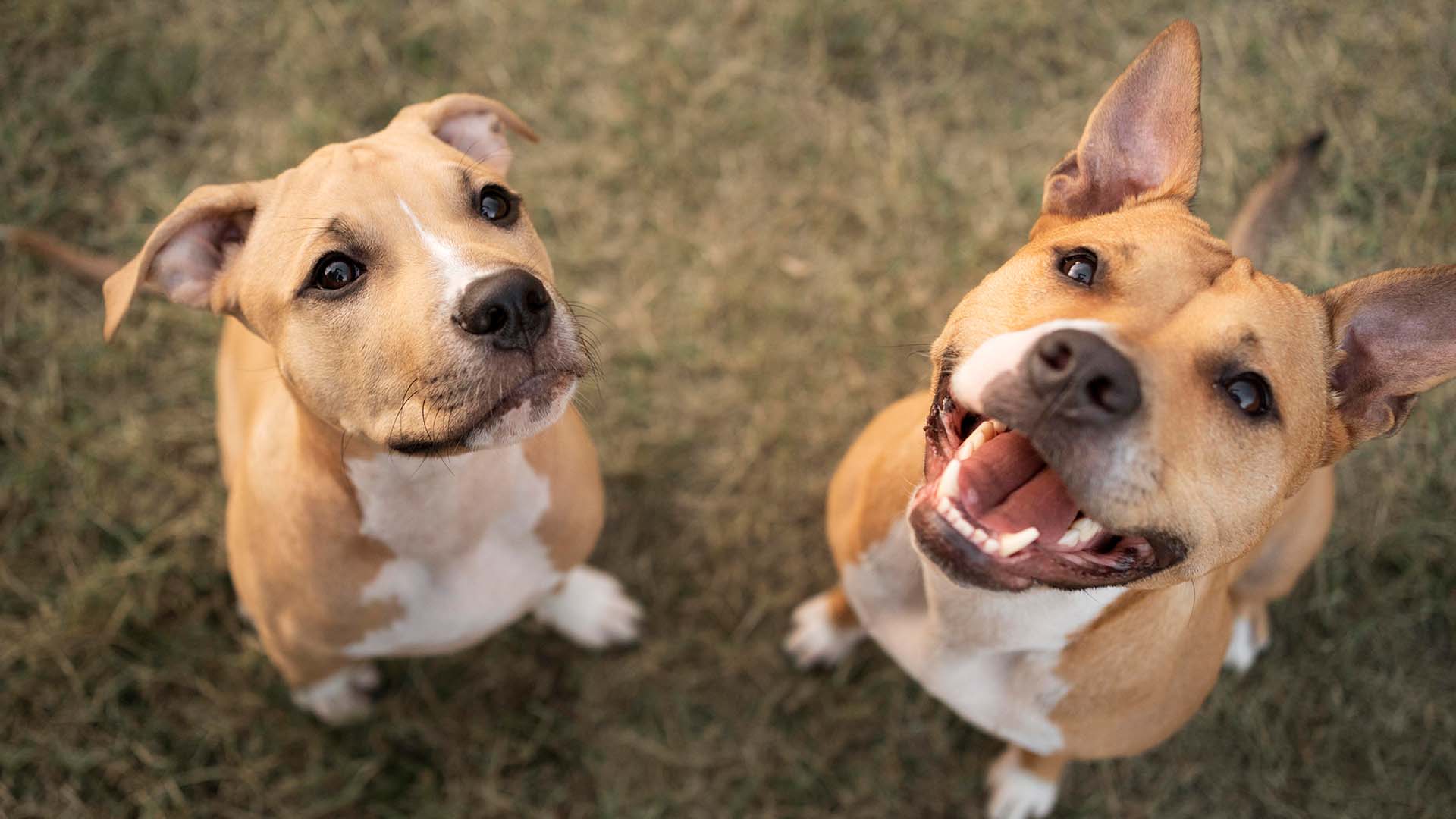
When dogs play or meet, look at both participants. One dog’s enthusiasm does not establish the other’s enjoyment. Notice repeated attempts to move away, hiding, tension or a change from loose movement to stiff staring. Interrupt early and allow a break, with safe separation where needed.
A dog does not need to greet every dog encountered on a walk. Creating distance can be the appropriate response when either animal looks uncomfortable. Repeated forced meetings are unlikely to make an overwhelming situation easier.
PDSA’s aggression guidance recommends monitoring both dogs and avoiding punishment or forced exposure. If there is persistent conflict, obtain help with assessment and management. Do not put hands between fighting dogs or grab at collars in the middle of a conflict.
Remember that discomfort can be physical
A dog who avoids touch, becomes irritable, changes posture or stops doing a familiar activity may be in pain. Trouble rising, reluctance on stairs, unusual licking, disrupted sleep or a reduced appetite are also worth reporting. These signs do not identify the cause on their own.
Cornell’s veterinary guide to recognising pain explains why changes in everyday behaviour matter. Arrange a veterinary assessment instead of assuming the dog needs firmer handling. Take notes or a safely obtained video of ordinary behaviour to the appointment; do not cause pain or provoke a reaction to make a recording.
The most useful record compares the dog with their own usual behaviour. Include when the change began, what activities are difficult and whether eating, movement or sleep have also changed. That gives your vet a clearer starting point than a general description of bad behaviour.
Turn observation into a kinder routine
For a few days, note where your dog settles easily and where they repeatedly become tense. Look for changes you can make: more distance from passing dogs, a quieter visitor routine or a resting area away from household traffic.
PDSA’s stress guidance recommends looking for patterns and seeking veterinary advice for concerning changes. Keep observations factual and let a qualified professional help interpret persistent problems.
Success is not a dog silently enduring every situation. It is a household that notices early, respects withdrawal and changes the circumstances before the dog needs to communicate more forcefully. Our first-week guide applies these principles to a new arrival.
Follow the evidence
Sources & further reading
Article sources checked 10 November 2026. Diagram sources checked 10 November 2026.
Follow a source for its full context, and check current government guidance for rules that may change.
- Dogs Trust — Reading the whole dogdogstrust.org.uk
- RSPCA — Illustrated body languagerspca.org.uk
- Animal Welfare Victoria — Body languageagriculture.vic.gov.au
- RSPCA WA — Communication mythsrspcawa.org.au
- PDSA — Comfort and discomfortpdsa.org.uk
- PDSA — Communication ladderpdsa.org.uk
- PDSA — Responsible interactionspdsa.org.uk
- PDSA — Children and dogspdsa.org.uk
- PDSA — Aggression guidancepdsa.org.uk
- Cornell — Recognising painvet.cornell.edu
- PDSA — Stress patternspdsa.org.uk