Published .
Suspected heatstroke is an emergency. Stop activity, move the dog out of the heat, begin cooling and contact the nearest open veterinary clinic immediately. Arrange urgent veterinary care even if the dog appears to improve.
Start cooling with cool running water over the body, soaking through to the skin, while keeping water away from the face. Use airflow from a fan or air conditioning where available. If another adult is present, one person can call the vet while the other cools the dog. Ask the clinic how to coordinate cooling, transport and monitoring for this dog.
The 2026 RECOVER veterinary first-aid guidelines support active cooling before transport. Do not wait for a thermometer reading, collapse or a complete list of symptoms before acting. First aid supports urgent veterinary treatment; it does not replace it.
The starting point
At a glance
- Plan activity and access to shade, water and cooler surroundings.
- Never rely on a parked car being safe for a dog.
- Suspected heatstroke needs immediate veterinary help.
Plan for the day you actually have
Heat safety begins before the walk or the afternoon outdoors. Check the forecast, expected humidity and whether temperatures will stay high overnight. A familiar routine may need changing for several days, including arrangements while everyone is at work.
The Bureau of Meteorology’s heatwave service provides forecasts and warnings covering the expected timing and affected areas. Its heatwave assessment considers daytime and overnight temperatures and recent local conditions. Use it to prepare ahead.
A weather warning is not a dog-specific exercise clearance. There is no single air temperature that makes every activity safe for every dog. Consider the individual, the surface, available shade, ventilation and the effort involved. Decide in advance what you will cancel, where the dog will rest and who can help if the house becomes too hot.
Understand your dog's particular risks
Dogs lose much of their excess heat through panting. An animal who cannot move air easily has less capacity to cool themselves. Flat-faced dogs and dogs with breathing problems need particular care, as do animals with other health conditions.
Body condition, coat, age and recent exposure to warm weather also affect risk. A dog accustomed to a cool environment should not suddenly undertake strenuous activity on the first warm weekend. UC Davis veterinary guidance identifies airway abnormalities, excess weight, humidity, poor ventilation and limited acclimatisation among the risk factors.
Discuss an individual summer plan with your vet if the dog has breathing or heart disease, reduced mobility or other ongoing illness. Ask about suitable activity and how to recognise a change from their usual breathing. A dog without these risk factors still needs protection; fitness and enthusiasm do not make heat harmless.
Make the home reliably cool
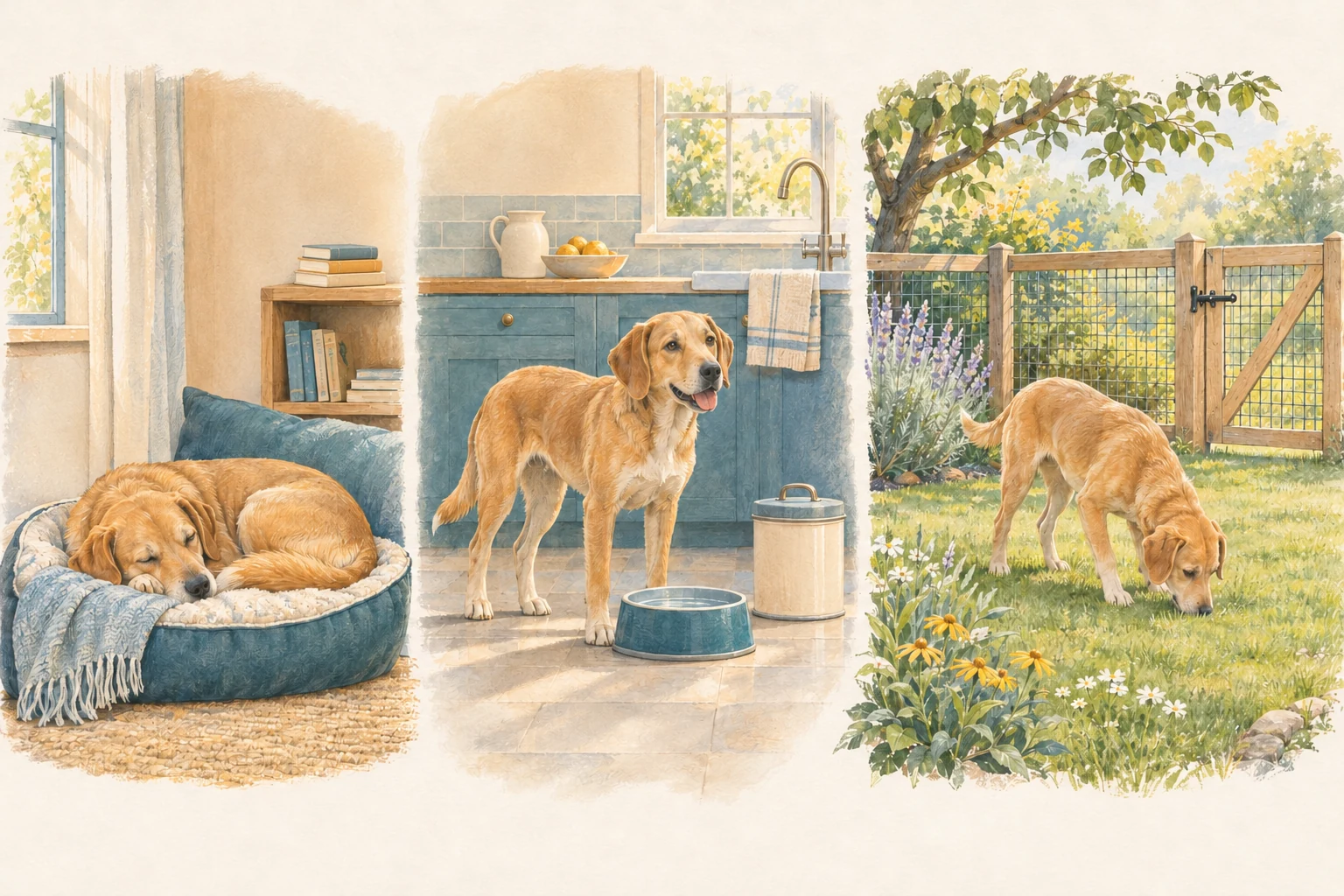
Provide a comfortable indoor area during extreme heat, ideally with effective cooling. Check the room at the time of day it is hottest rather than assuming it stays comfortable because it was cool that morning. Sunlight through a window and restricted airflow can change the conditions considerably.
Keep fresh drinking water accessible. Position bowls so the dog can reach them without crossing a hot surface, and check them through the day. A shaded outdoor area is useful, but the shade must still cover the resting place as the sun moves. The dog needs freedom to reach a cooler place.
Cornell’s summer-safety advice recommends limiting exposure, providing shade and using a cool indoor environment in extreme conditions. Think through a power failure or air-conditioning fault: identify a safe alternative and a person who can help. Cooling equipment cannot compensate for leaving a dog in an unsuitable environment without checks.
Change exercise before the dog struggles
Choose genuinely cooler conditions and reduce the length and intensity of activity. An evening can remain hot after the sun has moved, so the clock alone is not enough. On unsuitable days, postpone the outing and use gentle indoor activities with plenty of rest.
Repeated ball throwing, running beside a bicycle or energetic play can generate substantial body heat. Do not use the dog's willingness to continue as the only safety test. Cornell research on sporting dogs describes how strong motivation can compete with self-protection and how exercise pace affects heating.
That research concerns hunting dogs under study conditions; it does not establish a universal safe duration for pets. The practical lesson is to manage effort before problems appear. Carry water, choose an easy route back to a cool place and be willing to end the activity. A missed long walk is preferable to an avoidable emergency.
Protect paws and the whole body from hot surfaces
Asphalt, concrete, sand and artificial surfaces can become dangerously hot. Even natural ground or dry grass in sunny places may retain substantial heat. A route that includes a shaded park may still require crossing a large exposed car park to reach it.
RSPCA Australia’s heatstroke guidance explains that hot ground can add to a dog's heat load and cause skin damage. Look at the whole route and the places where the dog will wait, not just the destination.
If a surface feels hot, avoid it. A brief hand test cannot guarantee safety for a different surface, a longer exposure or an individual dog. Choose a cooler time and location instead. Limping, reluctance to walk or attention to the paws after heat exposure warrants veterinary advice; do not force the dog to continue.
Make travel a separate decision
Leave the dog in a suitable cool home when errands would require waiting in a vehicle. Shade, an open window and a short intended stop do not make an unattended car safe. A delay in a queue or a change of parking position can make a plan fail.
The American Veterinary Medical Association’s warm-weather guidance advises against leaving pets in cars and recommends planning travel around their safety. When travel is necessary, check cooling and airflow before loading, bring drinking water and minimise exposure while waiting or transferring between places.
Confirm that the destination has a suitable area for the dog. A cool journey does not solve a hot outdoor wait on arrival. Agree beforehand who is responsible at each stop, and change the arrangement if it would leave the dog unattended. Never use a parked vehicle as the alternative to a dog struggling alone at home.
Recognise a change early
Watch for unusually heavy or persistent panting, noisy or difficult breathing, excessive drooling, reluctance to continue activity, weakness or altered behaviour. Vomiting, diarrhoea, unsteadiness, confusion, seizures or collapse are serious signs.
The RSPCA’s heatstroke guidance describes this range of warning signs. Do not wait for all of them, and do not assume that a dog lying down during a walk is simply being stubborn. Stop, get the dog out of the heat, begin cooling and contact a vet.
When calling, describe the activity or environment, the signs and when they started. Tell the clinic about known breathing problems or other illness. Keep the animal's breathing and safety in view while help is arranged, and avoid forcing an exhausted dog to walk to the car.
Use effective cooling, without delaying for ideal equipment
Older advice sometimes tells carers to cool very slowly or wait until tepid water is available. Royal Veterinary College research challenges that approach: prompt cooling matters, and available water cooler than the dog can help.
Ordinary cold-tap water is suitable. Soak the body rather than just the paws, keep the face clear and use airflow. Do not wrap the dog in wet towels; they can restrict heat loss. Do not force water into the mouth or immerse a collapsed or unconscious dog's head. Follow the vet's instructions about when to stop active cooling and how to transport safely.
Prepare a cooled, ventilated vehicle and travel urgently as directed. Calling ahead helps the clinic prepare and confirm that it can receive the dog.
Follow through after the emergency
Apparent improvement does not establish that the internal effects of overheating have resolved. PDSA’s veterinary explanation describes possible damage to organs and blood clotting, along with the need for clinical monitoring and sometimes repeat tests.
After treatment, follow the discharge instructions about rest, monitoring, medication and rechecks. Ask what changes require an immediate call and when normal activity can resume. Do not use human fever medicines or improvise treatment at home.
Before the next hot day, review the circumstances with the vet and adjust the household plan. Store the regular and emergency clinic details where every carer can find them. Prevention works best when the person walking, transporting or looking after the dog knows the same plan.
For gentle activities at home, see everyday dog enrichment.
Follow the evidence
Sources & further reading
Article sources checked 10 November 2026.
Follow a source for its full context, and check current government guidance for rules that may change.
- RECOVER: 2026 veterinary first-aid guidelinesonlinelibrary.wiley.com
- Bureau of Meteorology: Heatwave servicesbom.gov.au
- UC Davis: Heat-related illness in dogshealthtopics.vetmed.ucdavis.edu
- Cornell: Summer heat safetyvet.cornell.edu
- Cornell: Overheating risk in sporting dogsvet.cornell.edu
- RSPCA Australia: Protecting dogs from heatstrokekb.rspca.org.au
- AVMA: Warm-weather pet safetyavma.org
- RSPCA: Heatstroke in dogsrspca.org.uk
- Royal Veterinary College: Updated cooling advicervc.ac.uk
- PDSA: Heatstroke in dogspdsa.org.uk