Look into their eyes as they look into our soulsNeed rescue help? Start here

The illustrated care library

Good care.
Close at hand.

Simple checklists to keep beside the full guide. Print a page, save it for later, and adapt it to your animal.

Sources checked 10 November 2026

Illustrated cat settling room with a hide, low perch, scratcher, separate food and water, and two litter trays in different places.Illustrated example

A printable care card

Before your cat arrives

Prepare a quiet base, agree on daily care, and let your cat choose the pace.

  • Check doors, windows and screens.
  • Prepare a quiet hide and a reachable resting place.
  • Separate food, water and toileting areas.
  • Provide two accessible litter trays in different locations.
  • Ask about familiar food, litter, care and medicines.
  • Save veterinary contacts and agree household boundaries.

A cat straining with little or no urine needs an emergency vet. A cat who stops eating needs prompt veterinary advice.

Sources: RSPCA Australia · Feline veterinary guidance
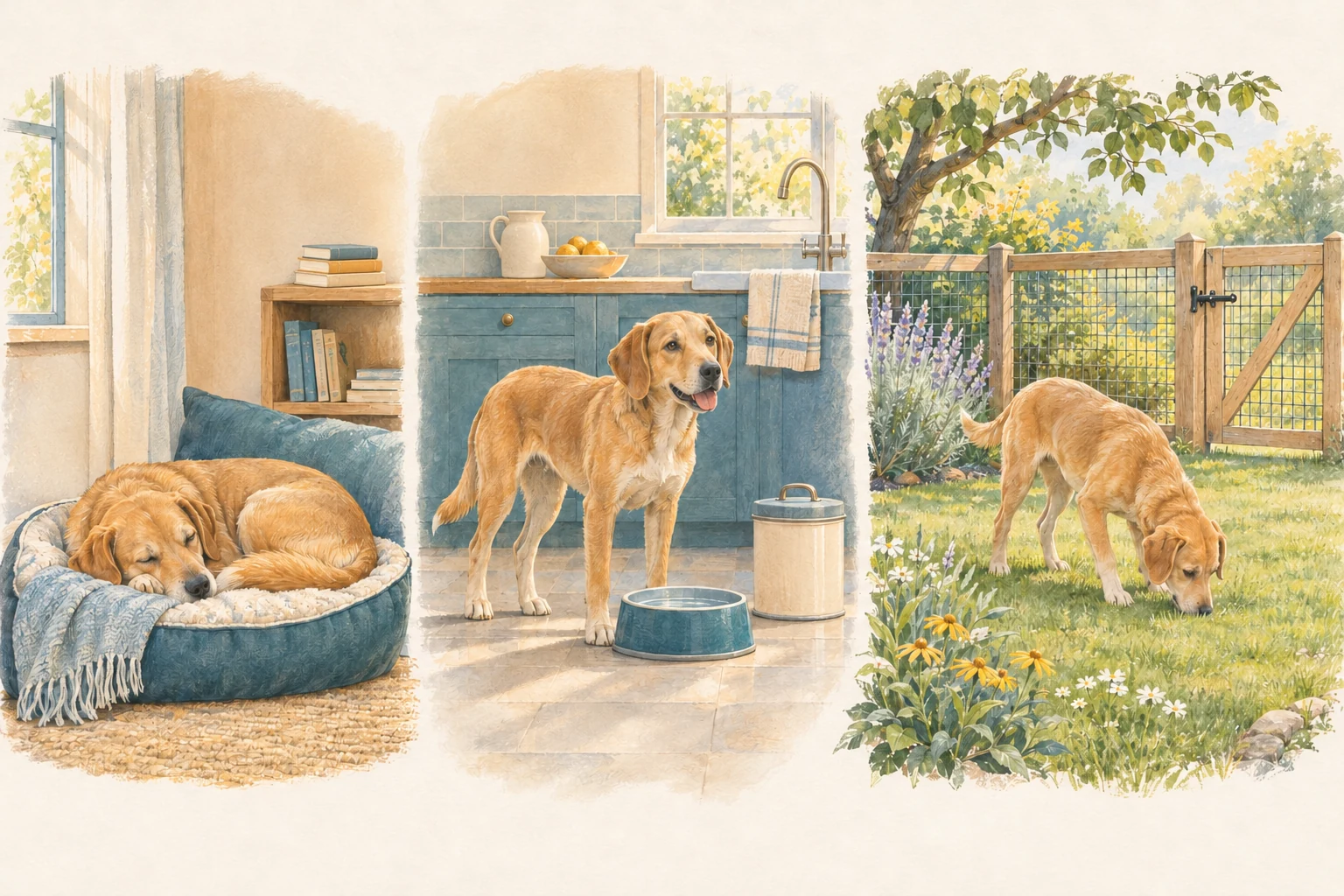
Illustrated scenes of one dog resting on a bed, beside fresh water, and sniffing in an enclosed garden with a closed gate.Illustrated example

A printable care card

Your dog’s daily care plan

Build a flexible rhythm around this dog’s health, comfort and individual needs.

  • Agree who handles meals, toileting, activity and rest.
  • Keep meals familiar and fresh water available.
  • Offer frequent toilet opportunities and reward success.
  • Protect undisturbed rest and a voluntary retreat.
  • Record appetite, drinking, toileting and changes.
  • Adjust difficult interactions and ask for help early.

This is a planning aid, not a fixed settling timetable. Discuss new health or behaviour concerns with your vet.

Sources: RSPCA WA · Dogs Trust

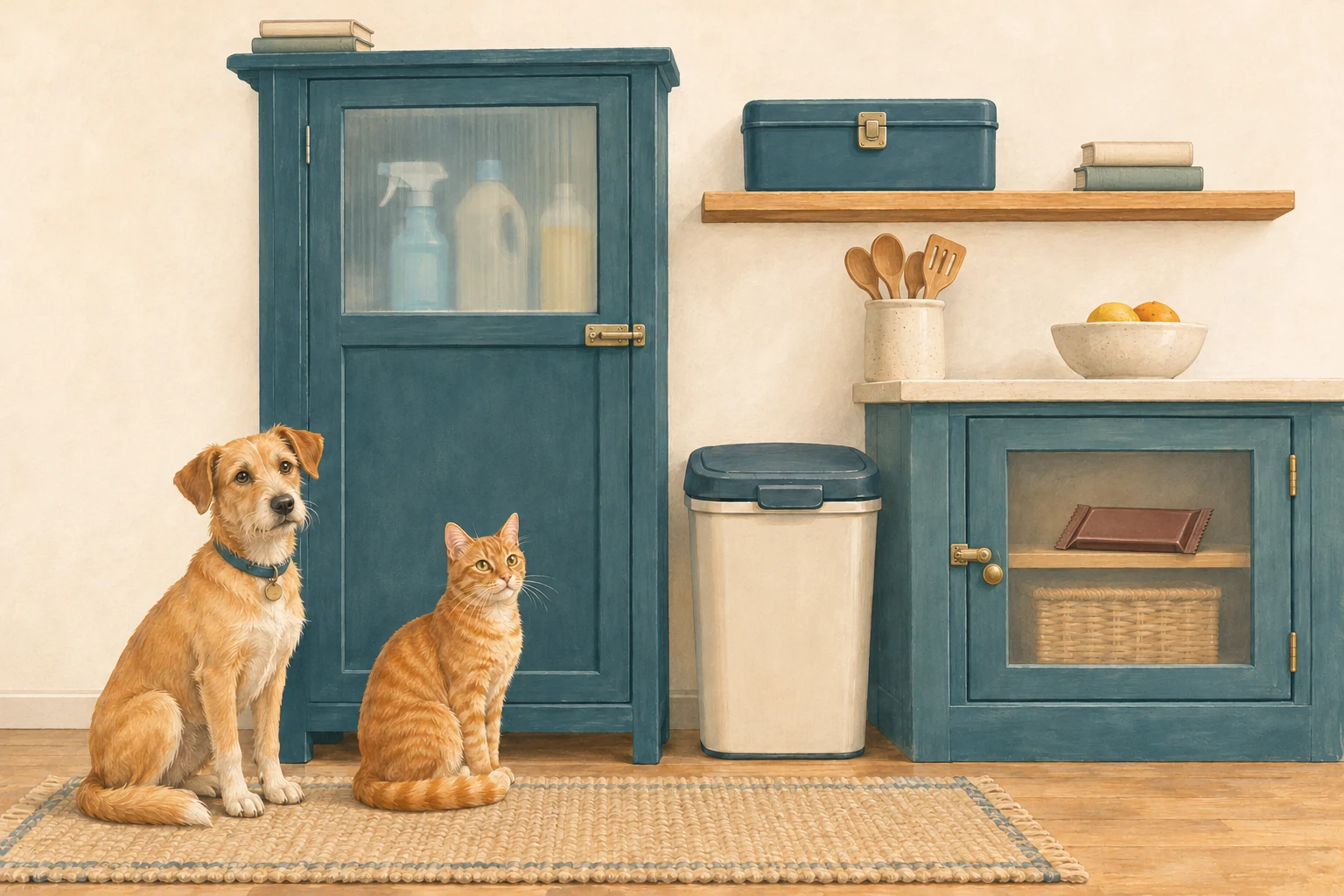
Illustration of pets beside secured cleaning-product storage, a closed medicine box, a lidded bin and a latched food cupboard.Illustrated example

A printable care card

Household hazard check

Check what your animal can reach, including bags, benches, gardens and rubbish.

  • Secure medicines, chemicals, baits and rubbish.
  • Check accessible bags, food and dropped tablets.
  • Identify plants; exclude true lilies and daylilies from cat homes.
  • Read species and separation instructions on pet treatments.
  • Keep product packaging available for professional advice.
  • Save your usual vet, emergency vet and poison-service contacts.

Suspected poisoning: call your vet promptly. After ingestion, do not induce vomiting or give food, drink or home remedies unless directed.

Sources: Animal Poisons Helpline · UC Davis Veterinary Medicine

Use these with the full guidance.

A checklist cannot assess an individual animal or replace veterinary advice. Read the linked guide for context, source details and when to seek help.

How to use our guides →

Stay connected

A little more animal kindness in your inbox.

Ask to hear about GAW’s work and ways you can help.